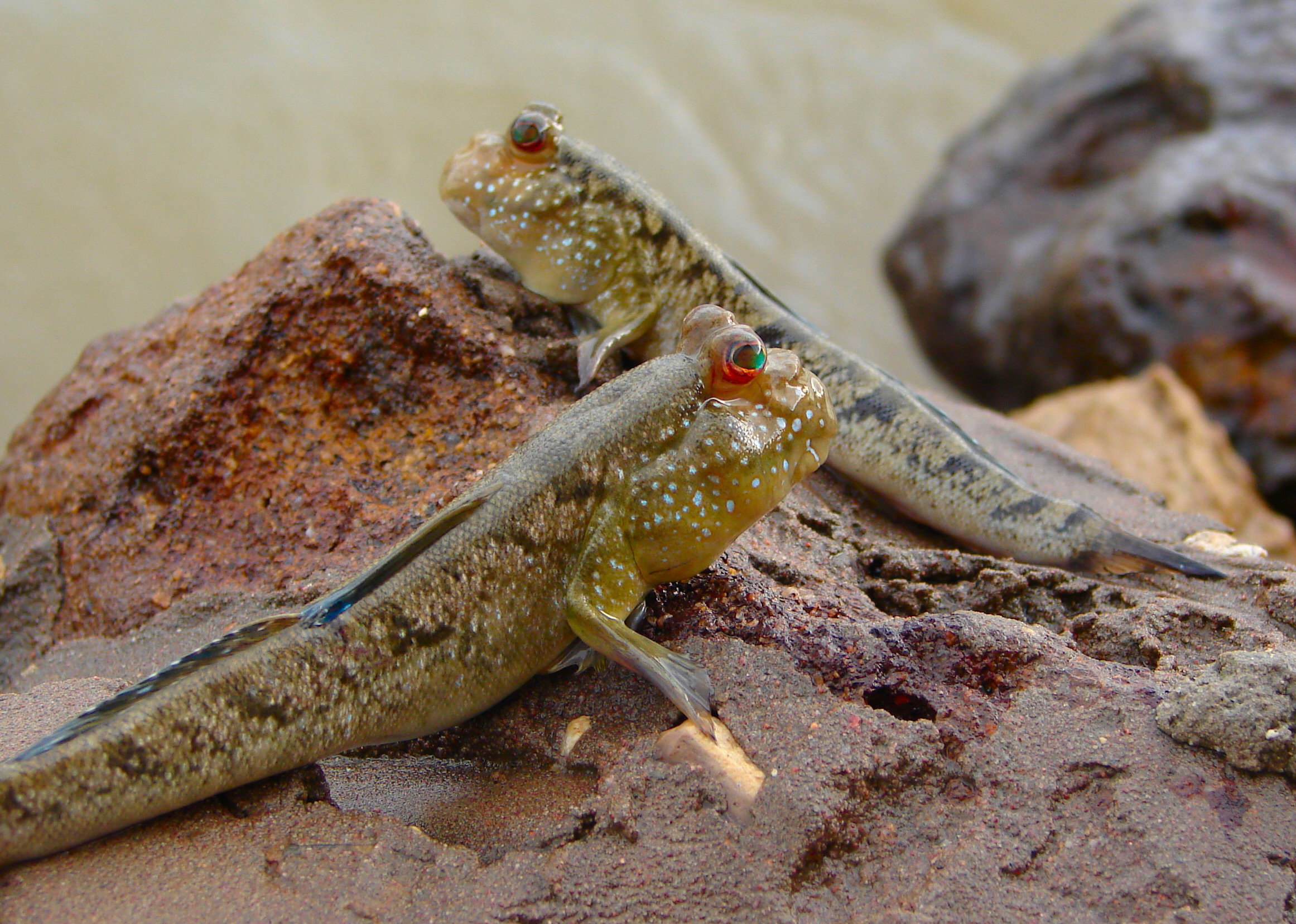
The African mudskipper (Periophthalmus barbarus), also commonly known as the Atlantic mudskipper, is a highly unique, amphibious fish famous for its ability to survive out of water, walk on land, and leap up to two feet in the air. Native to the mangrove swamps, tidal mudflats, and brackish estuaries of West and Central Africa, these fish spend over 90% of their time on land.
Key Characteristics & Biology
• Amphibious Breathing: They breathe out of water through their highly vascularized wet skin and mouth lining (cutaneous respiration), as well as by storing oxygenated water inside their specialized gill chambers.
• Terrestrial Locomotion: Their muscular, forward-set pectoral fins act like primitive limbs, allowing them to "crutch-walk" or skip across soft mud and climb low-hanging mangrove roots.
• Panoramic Vision: They feature protruding, frog-like eyes situated on top of their head that can move independently, offering 360-degree vision to look out for food and predators. They roll their eyes downward into fluid-filled sacs below the sockets to blink and keep them moist.
• Diet and Behavior: They are carnivorous ambush predators that feed on insects, worms, small crabs, and invertebrates. They dig deep mud burrows for temperature regulation, safety, and laying eggs.
Aquarium & Paludarium Care
Because of their highly interactive and personable nature, African mudskippers are popular but intermediate-to-advanced aquarium pets.
Care Requirement Specification
Tank Size Minimum 40-gallon breeder tank for 3 to 4 individuals; a 55 or 75-gallon tank is highly preferred to accommodate proper length and territorial boundaries.
Habitat Setup Requires a paludarium (an aquarium with both water and a significant land section). The tank needs high humidity, keeping the air at the same tropical temperature as the water.
Water Type Brackish water (a mix of fresh and marine water) with a few inches of depth.
Land Elements Sand beds, smooth rocks, or large pieces of Malaysian driftwood. They love to bask under a UVB or heating lamp over the land area.
Temperament Highly territorial. Males will aggressively display their colorful fins and fight over territory. Plenty of visual line-of-sight breaks (plants, wood, or rocks) are required to minimize aggression.
SKU: RT-24