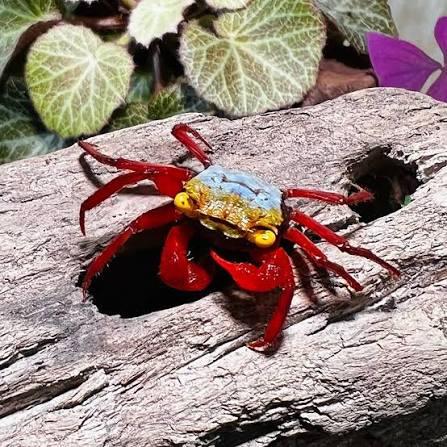
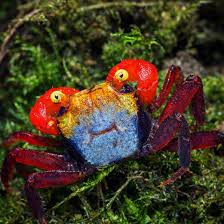
The Vampire Crab is a strikingly vibrant freshwater crustacean, named for its bright red body and claws that make it a standout in any aquarium or paludarium. Native to tropical regions of Southeast Asia, these semi-terrestrial crabs are relatively small and require a specialized setup to mimic their natural habitat. Their active behavior and unique appearance make them a popular choice for hobbyists looking for something different.
Vampire Crabs (Geosesarma hagen) do best in a paludarium with about 75-80% land and 20-25% water, kept at 75-82°F with high humidity. A 10-20 gallon tank works for a small group, and they need calcium-rich foods plus plenty of hiding spots to molt safely. Expect them to live 2-3 years with the right setup.
Natural Habitat
Vampire Crabs are found in forested areas near rivers, streams, and marshes. These environments are warm and humid, with plenty of hiding spots provided by rocks, roots, and leaf litter. They spend much of their time on land but require access to freshwater for hydration and molting.
Housing Requirements
Tank Setup
Minimum Tank Size: 40 liters for a small group (2–3 individuals).
Tank Type: Paludarium with both land and water areas is ideal.
Land Area: Use moist substrate like coco fiber or sphagnum moss with rocks and driftwood for climbing and hiding.
Water Area: Shallow, dechlorinated freshwater with a gentle flow.
Temperature: 24–28°C.
Humidity: Maintain high humidity (70–85%) in the tank using misting systems or frequent spraying.
pH Range: 6.5–7.5.
Water Depth: 2–5 cm; ensure easy access between land and water.
Decor and Substrate
Use a fine, moist substrate for burrowing.
Add rocks, driftwood, caves, and plants for hiding spots.
Live plants such as Anubias or mosses can enhance the setup and mimic natural conditions.
Tank Mates
Vampire Crabs are territorial and should not be kept with aggressive tank mates.
Suitable tank mates include other small, non-aggressive invertebrates or peaceful, surface-dwelling fish.
Avoid housing multiple males together in small enclosures to prevent fights.
Diet
Vampire Crabs are omnivorous and require a varied diet:
Protein: Offer shrimp pellets, bloodworms, or freeze-dried krill.
Vegetables: Blanched zucchini, spinach, or other leafy greens.
Fruits: Small pieces of banana, apple, or mango as occasional treats.
Calcium Source: Provide cuttlebone or crushed eggshells to support shell health.
Feed every other day, removing uneaten food to maintain water quality.
Behavior and Care
Activity
Vampie Crabs are diurnal, active during the day, and spend much of their time exploring land areas, foraging, or interacting with tank mates.
They may display territorial behavior, particularly among males.
Molting
Crabs molt periodically as they grow. During this time, they may hide and appear lethargic.
Provide a secure, moist hiding spot for molting and do not disturb the crab.
Water Quality
Perform weekly water changes to maintain clean and fresh conditions.
Use a sponge filter or similar low-flow filtration to avoid creating strong currents in the water area.
Breeding
Breeding Vampire Crabs in captivity is challenging but possible with the right conditions.
Reproductive Behavior
Males attract females by waving their claws and displaying vibrant colors.
After mating, females carry eggs under their abdomen until they hatch.
Raising Young
Juveniles are fully formed crabs but require tiny, safe hiding spots and finely crushed food.
Remove adults from the tank if breeding is successful to prevent predation on the young.
Key Notes
Territoriality: Provide plenty of space and hiding spots to reduce aggression.
Tank Maintenance: Maintain high humidity and clean water to prevent stress and disease.
Handling: Avoid frequent handling, as crabs can be stressed and may pinch when threatened.
Vampire Crabs are visually captivating and rewarding to care for in a paludarium-style enclosure. With their unique behaviors and vibrant coloration, they add a fascinating dynamic to semi-aquatic setups for dedicated hobbyists.