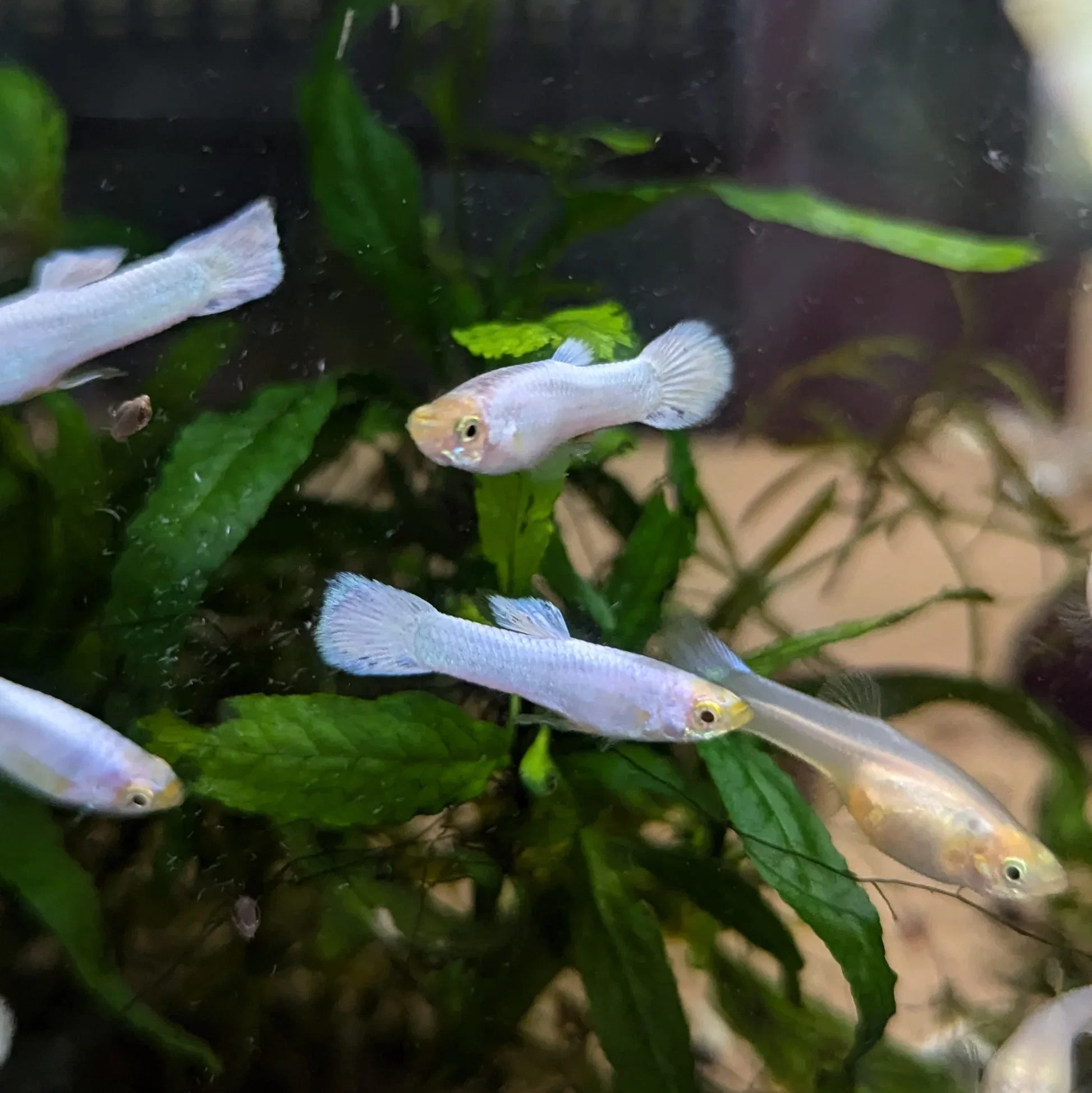
Snow White Guppies (Poecilia reticulata) are a highly sought-after, premium color morph of the common guppy, prized for their solid, pearlescent white coloration. Also commonly marketed as Platinum White Guppies, these stunning livebearers have a striking, clean appearance that makes them stand out beautifully against green live plants or dark aquarium backgrounds.
Care Overview & Water ParametersSnow White Guppies are generally hardy and excellent for both beginners and advanced hobbyists. They thrive when kept in stable, clean conditions:
Tank Size: Minimum 20 to 50 litres for a small group.Temperature: Tropical water between 22°C and 28°C.pH Range: Ideal at 7.0 to 8.0. They heavily prefer moderately hard, alkaline water.Diet: Omnivorous. Feed them high-quality veggie flakes, spirulina, and small live or frozen foods like baby brine shrimp and daphnia.
Physical Differences & CompatibilityMales: Reach about 3.5 to 5 cm. They display long, flowing fins and a highly vibrant, intense solid white or platinum shine.
Females: Larger, reaching up to 6 to 7.5 cm. They have rounder bodies and generally exhibit less white saturation, often looking somewhat translucent or silvery.
Social Ratio: Always keep them in a ratio of 1 male to 2 or 3 females. This prevents the males from exhausting a single female with constant breeding advances.
Tank Mates: Extremely peaceful. House them with other gentle species like neon tetras, mollies, platies, and peaceful bottom-dwellers. Avoid aggressive tank mates or notorious fin-nippers, as the males' flowing tails are an easy target.
Breeding NotesIf you mix males and females, they will breed frequently, giving birth to live fry every 3 to 4 weeks. To successfully breed high-quality, pure "true-breeding" Snow Whites, you must selectively breed individuals. The classic, pristine Snow White phenotype typically relies on a recessive blond base body color. If crossed with standard strains, variations like gray-based heads or half-black tuxedo patterns can quickly surface in future generations.