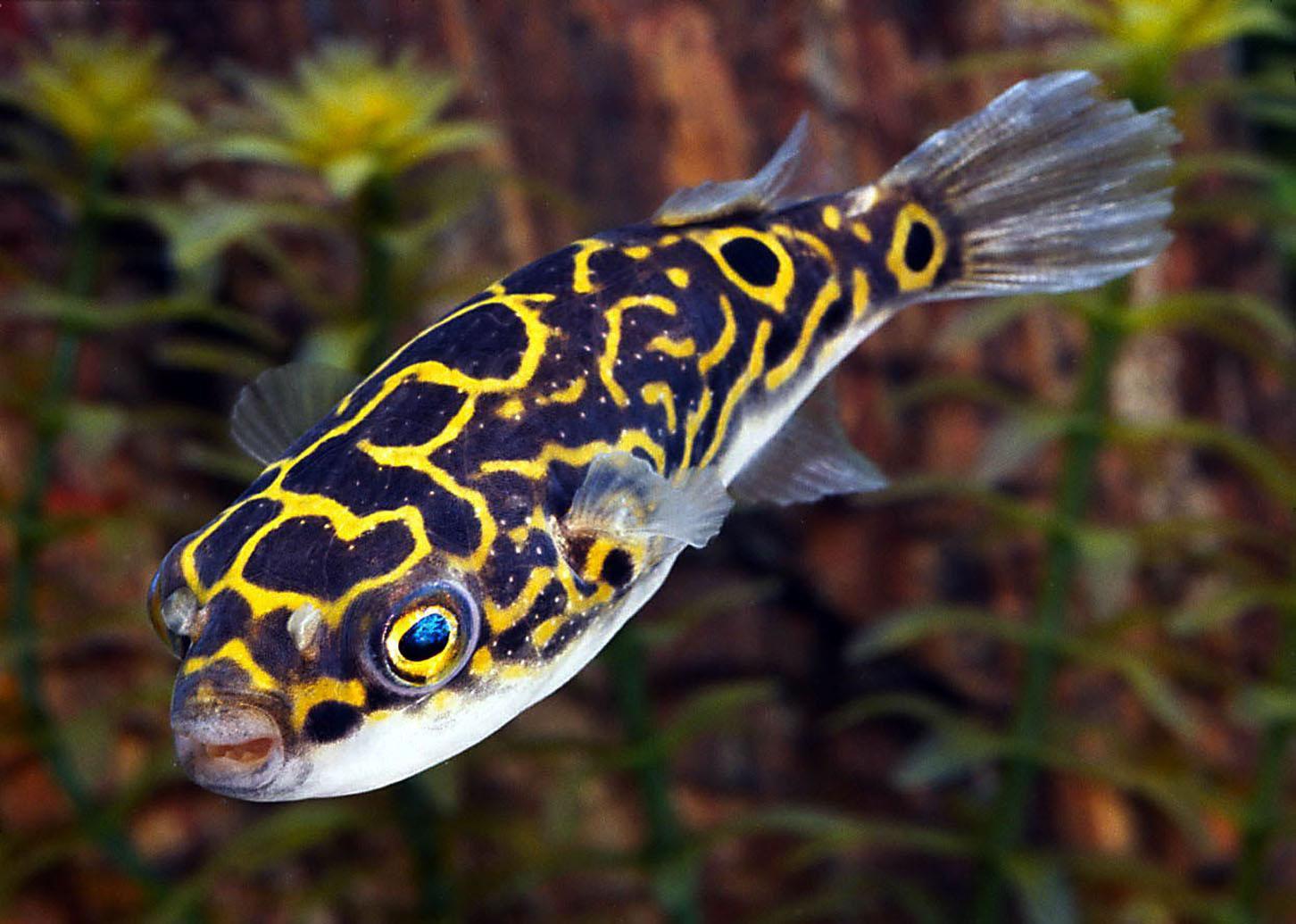
The Figure 8 Pufferfish (Dichotomyctere ocellatus, formerly Tetraodon biocellatus) is a small, active brackish-water puffer native to Southeast Asia, named for the yellow-green figure-eight patterns on its dark back. Adults grow to about 6 to 8 cm (3 inches) and can live up to 15 years in a well-maintained aquarium.
Tank & Water Requirements
According to care guides from FishLore and The Spruce Pets, this species needs stable, slightly salty conditions to thrive long-term.
• Minimum Tank Size. Provide at least 55 to 75 litres (15 to 20 gallons) for a single fish. Add roughly 40 litres (10 gallons) for each additional puffer.
• Salinity (Brackish Water). Maintain a low-end brackish specific gravity of 1.005 to 1.008 using marine salt mix. Juveniles are often sold in freshwater, so raise salinity slowly over several weeks to protect beneficial filter bacteria.
• Temperature & pH. Keep the water warm at 24 to 28°C (75 to 82°F) with an alkaline pH between 7.5 and 8.3.
• Filtration & Decor. Use strong filtration because puffers are messy eaters. Include plenty of rocks, driftwood, and salt-tolerant plants to break up lines of sight and prevent boredom.
Diet & Beak Care
• Hard-Shelled Foods. Like other puffers, their fused teeth grow continuously throughout their lives. Feed crunchy foods like pond snails, ramshorn snails, cockles, and small crabs regularly to naturally wear down their beak.
• Meaty Staples. Supplement their diet with frozen or live bloodworms, brine shrimp, mysis shrimp, and earthworms. They will generally ignore dry flake or pellet foods.
Behavior & Tank Mates
• Temperament. Figure 8 puffers are intelligent and inquisitive, but they are semi-aggressive fin-nippers.
• Compatible Tank Mates. They do best in a species-only setup. In larger tanks, they can sometimes live alongside fast, hardy brackish fish like mollies or bumblebee gobies.
• Defense Mechanism. They can inflate their bodies with water or air when threatened, and a user on Reddit's r/Aquariums notes that severe stress can cause them to release toxins into the tank.
SKU: MIS-0185