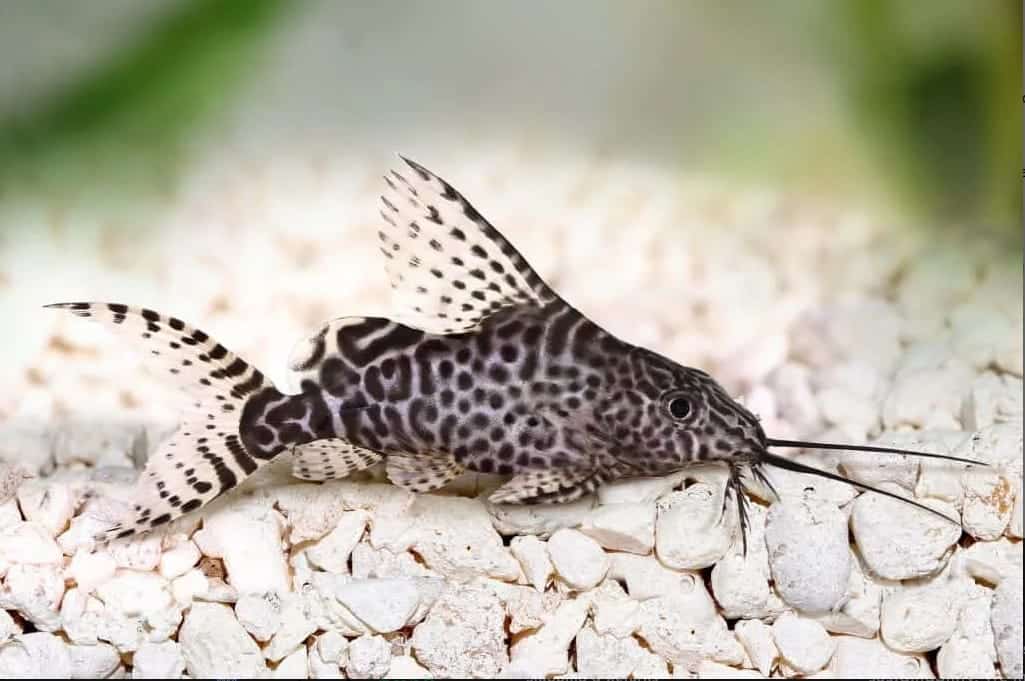
The Featherfin Synodontis (Synodontis eupterus), also known as the featherfin squeaker, is a popular freshwater catfish native to Central and West Africa. It gets its name from its tall, lacy dorsal fin and the squeaking sound it makes by rubbing its pectoral fin spines together when stressed or excited.
Quick Profile
• Scientific Name. Synodontis eupterus.
• Native Habitat. Basins of the White Nile, Volta, and Niger Rivers, as well as the Chad Basin.
• Adult Size. Typically grows to 20–25 cm (8–10 inches) in aquariums, though wild specimens can reach up to 30 cm (12 inches).
• Lifespan. Frequently lives 10 to 15 years or longer with proper care.
• Temperament. Generally peaceful toward other species, though it can become territorial with its own kind or other bottom-dwellers.
Appearance & Behavior
• Distinctive Fins. Adults develop long, feathery extensions on their dorsal fin that give the fish its signature silhouette.
• Coloration. Covered in dark brown or black spots over a lighter tan, grey, or olive body, which helps it blend into rocky riverbeds.
• Upside-Down Swimming. Like many Synodontis species, it is known to occasionally swim upside down to graze on algae or food at the water's surface.
• Nocturnal Activity. Most active during dusk and at night, spending much of the daytime hiding in caves or under driftwood.
Aquarium Care & Tank Setup
• Minimum Tank Size. Requires at least a 200-litre (55-gallon) aquarium to comfortably accommodate its adult size.
• Water Parameters. Thrives in temperatures between 22°C and 27°C (72°F–81°F), a pH of 6.5–7.8, and moderately soft to hard water.
• Substrate & Decor. Use smooth sand or fine gravel to protect its delicate sensory barbels, and provide plenty of caves, rocks, and driftwood for daytime shelter.
• Diet. An omnivorous bottom-feeder that readily accepts sinking catfish pellets, algae wafers, frozen bloodworms, brine shrimp, and occasional blanched vegetables.
• Tank Mates. Pairs well with medium-to-large community fish or African cichlids. Avoid very small fish like neon tetras, which it may eat once fully grown.
SKU: CT-0145