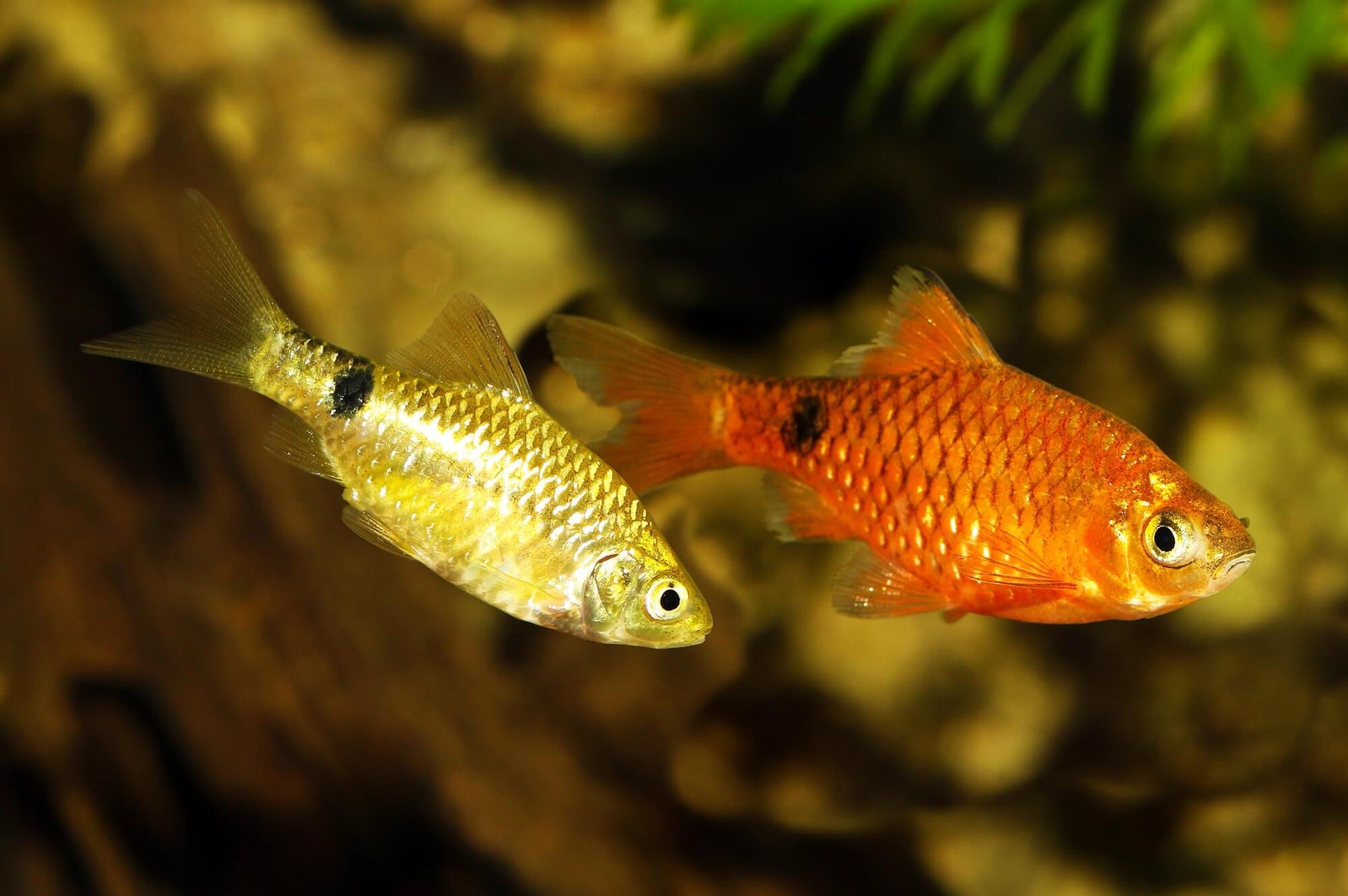
The Rosy Barb (Pethia conchonius) is a vibrant, hardy, and highly active subtropical freshwater fish native to South Asia. Renowned for their shimmering metallic scales and playful schooling behavior, they are excellent centerpieces for beginner and experienced aquarists alike.
📋 Species Overview
• Scientific Name: Pethia conchonius (formerly Puntius conchonius)
• Adult Size: Up to 10–15 cm (4–6 inches) in the wild, typically topping out around 7–10 cm in captivity.
• Lifespan: 5 to 7 years with optimal care.
• Sexual Dimorphism: Males develop a brilliant, fiery rosy-red or deep orange hue—especially when spawning—with black markings on their fins. Females are plumper and more uniform gold, silver, or greenish-yellow, completely lacking the black fin tips.
💧 Tank Setup & Water Parameters
Unlike typical tropical fish, Rosy Barbs are a subtropical species that thrives in slightly cooler, well-oxygenated, moving water.
• Minimum Tank Size: 100 litres (approx. 30 gallons) for a small school. Because they are fast, active swimmers, a longer tank (90–120 cm) is highly preferred.
• Temperature Range: Ideal at 18°C–22°C (64°F–72°F). While they can tolerate up to 26°C (79°F), long-term high temperatures shorten their lifespan and should be avoided.
• pH & Hardness: Highly adaptable; pH 6.0–8.0 and 5–19 dGH.
• Environment: They excel in planted aquariums with open swimming paths. Use robust, hardy plants like Java Fern, Anubias, or Amazon Swords, as Rosy Barbs may nibble on delicate or soft-leafed foliage. Secure the aquarium with a tight lid, as they are notorious jumpers.
🐟 Behavior & Compatibility
Rosy Barbs are peaceful but incredibly high-energy community fish.
• The Schooling Rule: You must keep them in groups of 5 to 6 or more (ideally 8–10+). Keeping them in small numbers stresses them out and triggers notorious fin-nipping behavior.
• Ideal Tankmates: Best paired with similarly sized, robust, fast-moving species such as Danios, larger Tetras, Rasboras, Corydoras, Loaches, and Rainbowfish.
• Species to Avoid: Do not house them with slow-moving or long-finned fish like Bettas, Guppies, or Angelfish, as their flowing fins present an irresistible target for nipping. They will also readily prey on dwarf aquarium shrimp.
🍽️ Diet & Nutrition
They are enthusiastic, aggressive omnivores with large appetites. Feed them a balanced mix of:
• High-quality flake and pellet foods to provide base nutrition.
• Frozen or live items like bloodworms, daphnia, and brine shrimp to boost coloration.
• Plant matter or blanched vegetables (like spinach, peas, or zucchini). They are also excellent at naturally controlling nuisance hair algae in the aquarium.
SKU: BR-0125