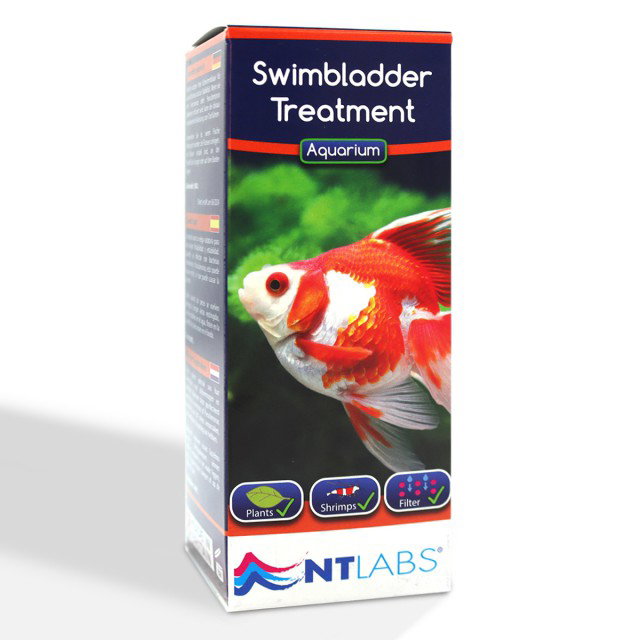
NT Labs Aquarium Swimbladder Treatment is an internal antibacterial medication specifically formulated to combat infections caused by Aeromonas and Pseudomonas bacteria, which directly impact a fish's swimbladder. By eradicating these disease-causing bacteria internally, the treatment helps restore proper buoyancy and stability.
🐟 When to Use (Symptoms)
Use this treatment if your coldwater or tropical fish (especially ornamental goldfish and flowerhorns) display the following signs:
Irregular swimming (swimming on their side, upside down, or erratically).
Buoyancy loss (sinking to the bottom or floating uncontrollably at the surface).
Lethargy and clumped/clamped fins.
Step-by-Step Dosage Instructions
Calculate Tank Volume: Determine the volume of your aquarium in litres:
Length x Width x Depth / 1000. Alternatively, use the official NT Labs Dosage Calculator.
Dose Ratio: Use 10ml of treatment for every 50 litres of aquarium water. A standard 100ml bottle treats up to 500 litres.
Prep the Tank: Remove all chemical filtration media, such as activated carbon or zeolite, as they will absorb the medication.
Mix and Apply: Shake the bottle thoroughly. Mix the measured dose into 1 litre of existing aquarium water, then pour it slowly back into the tank.
Follow Up: The treatment acts as a single dose. If a second application is required, wait 7 days after the first dose. Before redosing, perform a 30% partial water change and test your parameters using a kit like the NT Labs Test Kits.
Product Notes & Active Ingredients
Active Composition: Contains acriflavine and 9-aminoacridine HCl.
Water Discoloration: The acridine dyes will turn your aquarium water a strong, fluorescent yellow color. This simply indicates that the formula is active. You can perform a water change 5 days post-treatment to remove the tint.
Staining Hazard: The liquid will permanently stain clothes and skin. Handle with care.
Safety Profile: It is completely harmless to your beneficial filter bacteria, live aquarium plants, and all fish species.
SKU: NTL0481