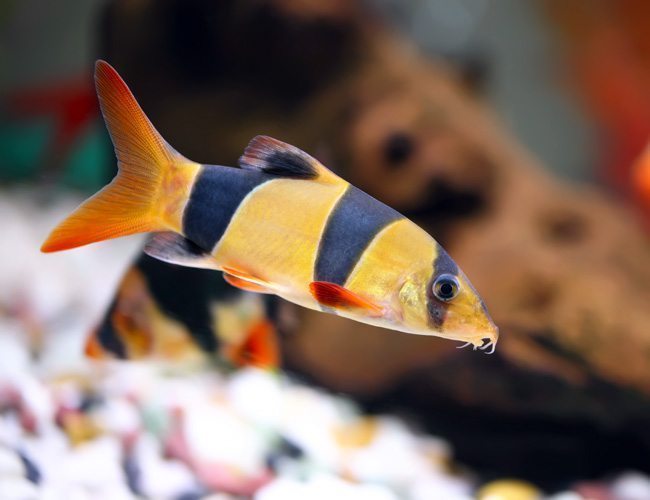
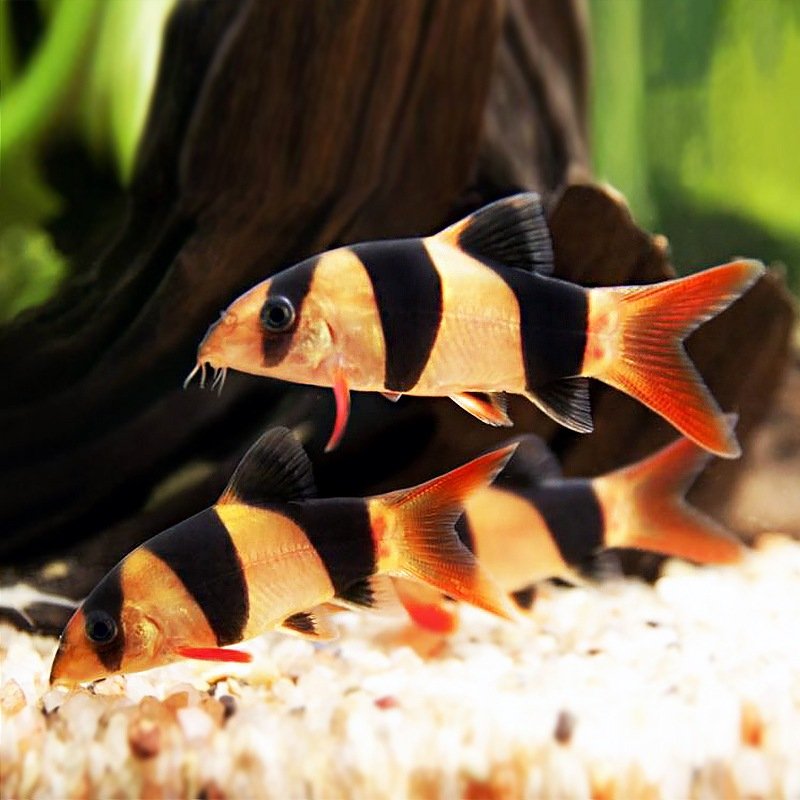
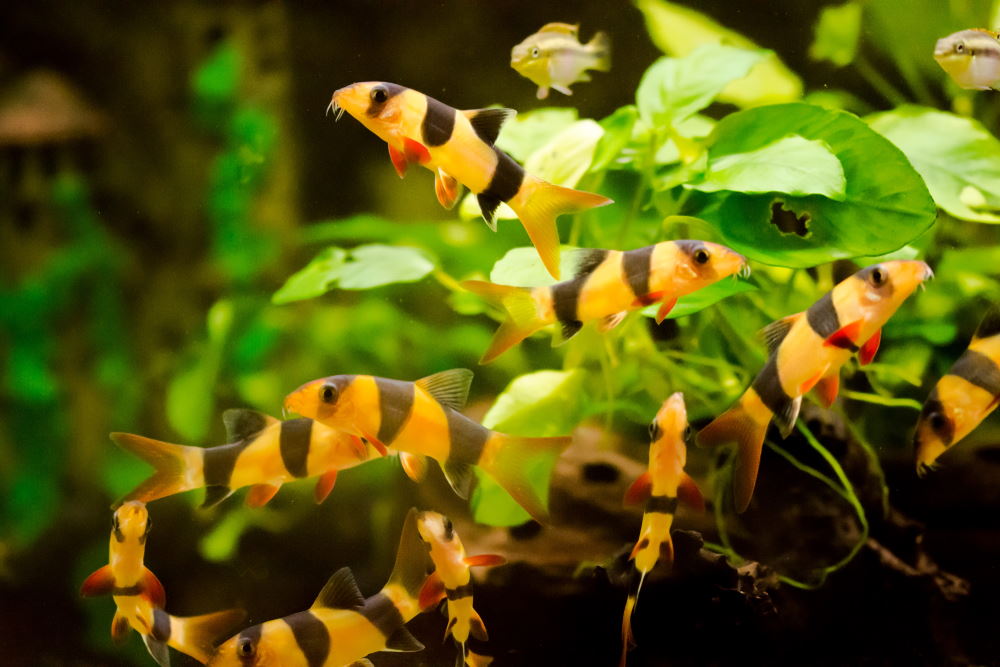
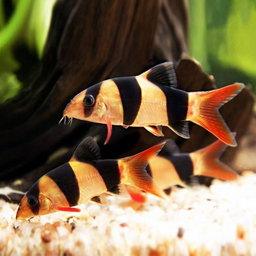
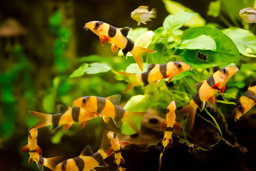
The Clown Loach (Chromobotia macracanthus) is a popular and colourful freshwater fish native to the rivers and streams of Southeast Asia, particularly in Indonesia and Malaysia. Known for its distinctive appearance and playful behaviour, this loach is a favourite among aquarists and is often sought after for community tanks.
Physical Characteristics:
Size: Clown Loaches can grow quite large, typically reaching sizes of 15-25 cm (6-10 inches) in length, with some individuals exceeding 30 cm (12 inches) in well-maintained conditions.
Coloration:
Body: They are characterised by their vibrant orange body with bold black stripes running horizontally along their sides. This striking coloration makes them stand out in any aquarium.
Fins: Their fins are generally translucent, with the same orange and black colouration extending to the dorsal, anal, and caudal fins.
Shape: Clown Loaches have a slender, elongated body with a slightly flattened underside, making them well-suited for navigating through rocky substrates and plant life.
Behaviour:
Temperament: Clown Loaches are generally peaceful and social fish, making them great additions to community tanks. They can sometimes display territorial behaviour but are usually non-aggressive.
Activity Level: These loaches are quite active and enjoy foraging for food. They are known for their playful antics, often seen swimming in groups and exploring their environment.
Community Behaviour: Clown Loaches thrive in groups and should ideally be kept in shoals of at least 3-5 individuals to promote social behaviour and reduce stress.
Aquarium Care:
Tank Size: A minimum tank size of 150 litres (40 gallons) is recommended for a small group of Clown Loaches, as they require ample swimming space.
Water Parameters:
Temperature: Clown Loaches thrive in warm water, with an ideal temperature range of 24°C to 28°C (75°F to 82°F).
pH: They prefer slightly acidic to neutral water, with a pH range of 6.0 to 7.5.
Hardness: Soft to moderately hard water, with a general hardness (GH) of 5-12 dGH, is ideal.
Tank Setup:
Substrate and Decorations: A soft substrate is recommended to protect their delicate bodies and barbels. Clown Loaches appreciate a well-planted tank with plenty of hiding spots created using caves, driftwood, and plants.
Lighting: Moderate lighting is preferred, as it mimics their natural habitat and helps them feel secure. Adding floating plants can provide shaded areas.
Filtration: A strong filtration system is essential for maintaining water quality, but ensure that the current is not too strong, as Clown Loaches prefer calmer waters. Regular water changes (about 20-30% weekly) are necessary to keep the tank healthy.
Diet:
Clown Loaches are omnivorous and require a varied diet to thrive:
Pellets: High-quality sinking pellets formulated for bottom feeders should form the staple of their diet.
Live or Frozen Foods: Offer live or frozen foods such as brine shrimp, bloodworms, and daphnia to provide essential protein and variety.
Vegetable Matter: Clown Loaches also benefit from occasional feedings of blanched vegetables like zucchini or cucumber.
Breeding:
Breeding Clown Loaches in captivity is rare and challenging, but if attempted:
Breeding Setup: A separate breeding tank with gentle filtration, soft substrate, and plenty of hiding spots is ideal. The water should be kept slightly cooler (around 22°C to 24°C or 72°F to 75°F).
Spawning Behaviour: Breeding usually occurs during the rainy season in the wild, which may require replicating environmental conditions. Spawning behaviour is rarely observed in captivity.
Fry Care: If fry are produced, they can be fed with infusoria or newly hatched brine shrimp until they are large enough for crushed pellets.
Special Considerations:
Social Structure: Keeping Clown Loaches in groups is beneficial for their well-being, as they thrive in social settings.
Water Quality: Regular water testing and changes are crucial to prevent stress and illness.
SKU: RBM