Romanesco Broccoli
Brassica oleracea (Botrytis Group)
Product Description
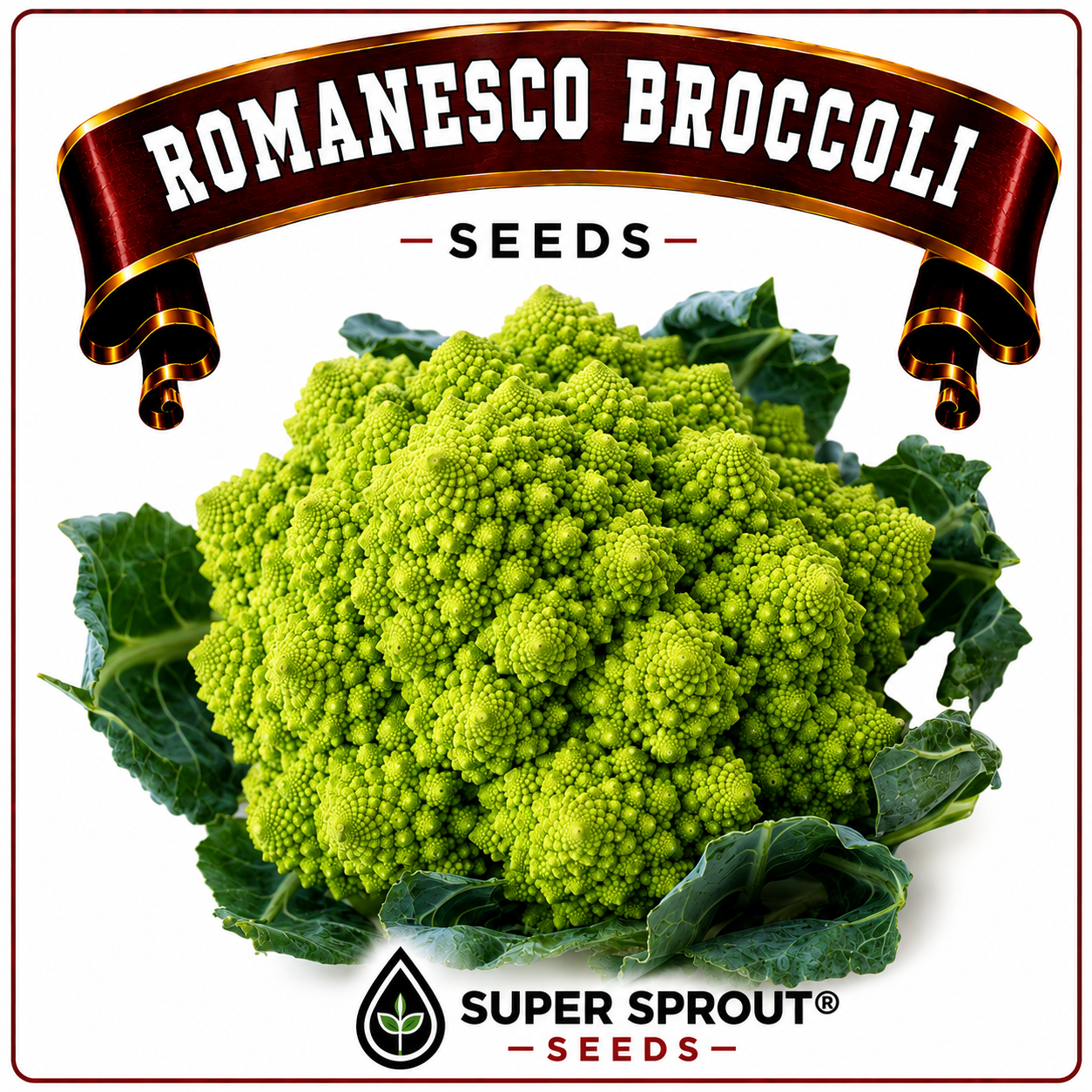
Grow one of the most spectacular vegetables in the garden with Romanesco Broccoli. Famous for its vivid lime-green colour and extraordinary spiral-shaped florets, Romanesco produces tightly packed, pointed heads with an almost geometric appearance.
Despite commonly being called Romanesco broccoli, Romanesco types are generally classified within the cauliflower (Botrytis) group of Brassica oleracea. The RHS describes Romanesco cauliflower as producing distinctive green heads with peaked florets.
Romanesco has a mild, slightly sweet flavour and a firm, pleasantly crisp texture. It is delicious roasted, steamed, sautéed or added to pasta, soups, salads and vegetable dishes. The striking heads also make an impressive addition to the home vegetable garden.
Like other cauliflowers, Romanesco prefers cool, steady growing conditions. Excessive heat, drought or interruptions in growth can result in smaller or poorly formed heads, making consistent moisture particularly important.
🌱 Growing Instructions
Sowing: Sow seeds approximately 1–1.5 cm deep in seed trays, modules or a prepared seedbed. Starting seeds in individual modules can help minimise root disturbance when transplanting.
Germination: Keep the growing medium consistently moist. Cauliflower seed is recommended at approximately 12–22°C during germination and should generally germinate within about two weeks under suitable conditions.
Transplanting: Transplant seedlings when they are well established, usually when they are approximately 10–15 cm tall and around six weeks old. Harden off indoor-grown seedlings before planting them outside.
Position: Plant in full sun for best growth.
Soil: Choose deep, fertile soil that retains moisture while remaining well drained. Cauliflowers perform well at around pH 6.5 and benefit from soil enriched with well-rotted compost or manure.
Spacing: Allow approximately 45–60 cm between plants and about 60 cm between rows for summer/autumn cauliflower types. Adequate spacing encourages good airflow and gives the large leaves and developing heads room to grow.
Watering: Keep the soil consistently moist but not waterlogged. Avoid allowing plants to dry out, particularly while the heads are developing, as irregular moisture can interfere with head formation.
Feeding: Romanesco appreciates fertile soil. Adding compost before planting helps provide the rich conditions cauliflower crops require. In poorer soils, an organic nitrogen-rich feed can be applied while plants are young, before heads begin forming.
🇿🇦 Growing Romanesco in South Africa
Romanesco is best treated as a cool-season vegetable. In much of South Africa, aim for the developing heads to mature during the cooler part of the year rather than during intense summer heat. This recommendation follows Romanesco's cauliflower-type growing requirements: hot or dry conditions can cause plants to bolt or produce small or malformed heads.
Exact sowing times will vary considerably between South Africa's warmer subtropical regions, inland frost-prone areas and cooler coastal climates.
Protect young plants from common brassica pests such as caterpillars, aphids, flea beetles, cabbage root fly, snails and birds. Fine insect mesh can provide useful physical protection.
🥦 Harvesting
Harvest the Romanesco head while it is firm, compact and tightly formed, before the florets begin separating. Cauliflowers generally take approximately three to six months from sowing to maturity, although actual timing varies substantially with the variety, season and growing conditions.
Cut the main stem below the head with a sharp knife, leaving several surrounding leaves attached to help protect the harvested head.
Growing Tip: Romanesco rewards steady growth. Fertile soil, generous spacing and consistent watering are particularly important for producing those beautiful, tightly packed spiral heads.
SUPER SPROUT SEEDS — Grow Something Extraordinary.