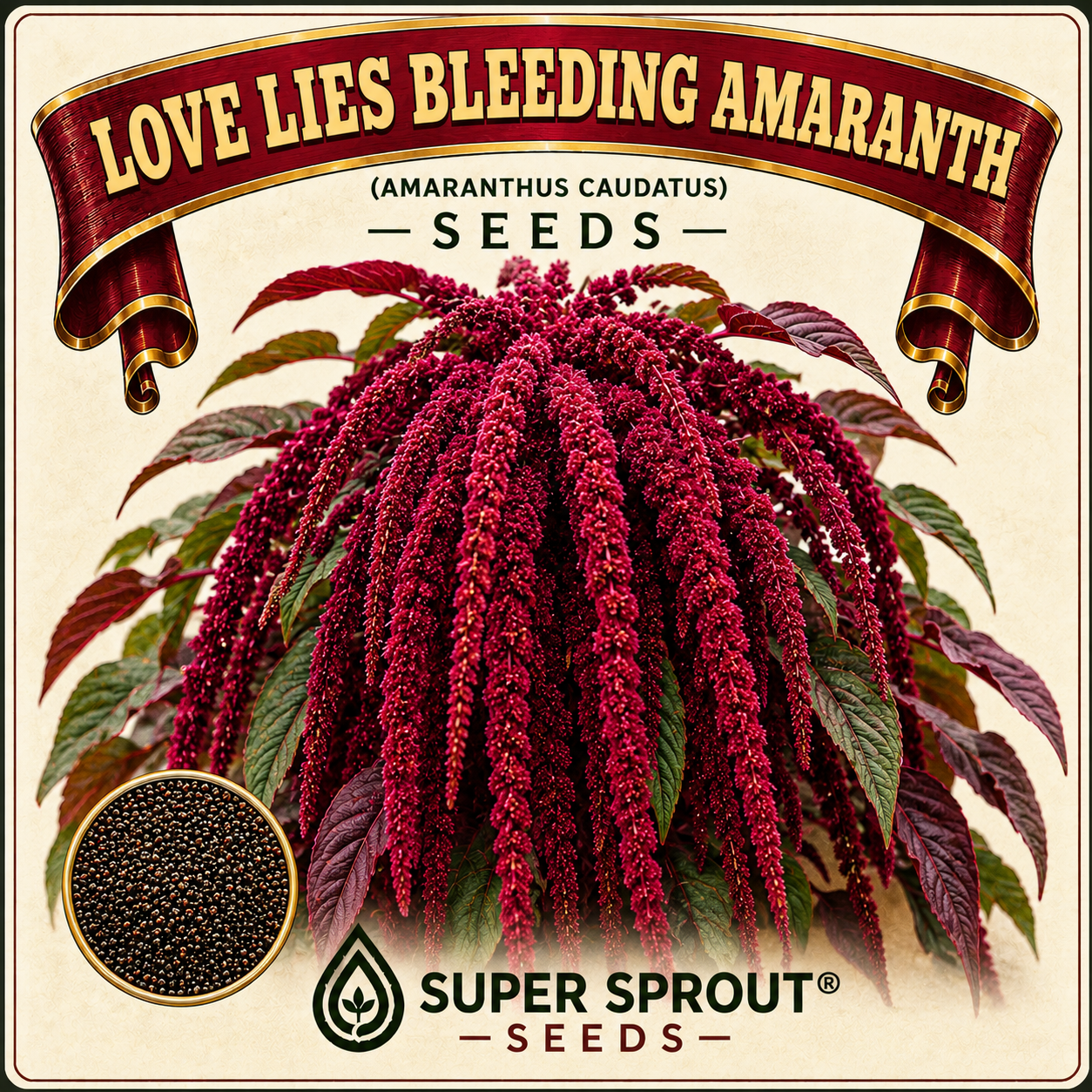
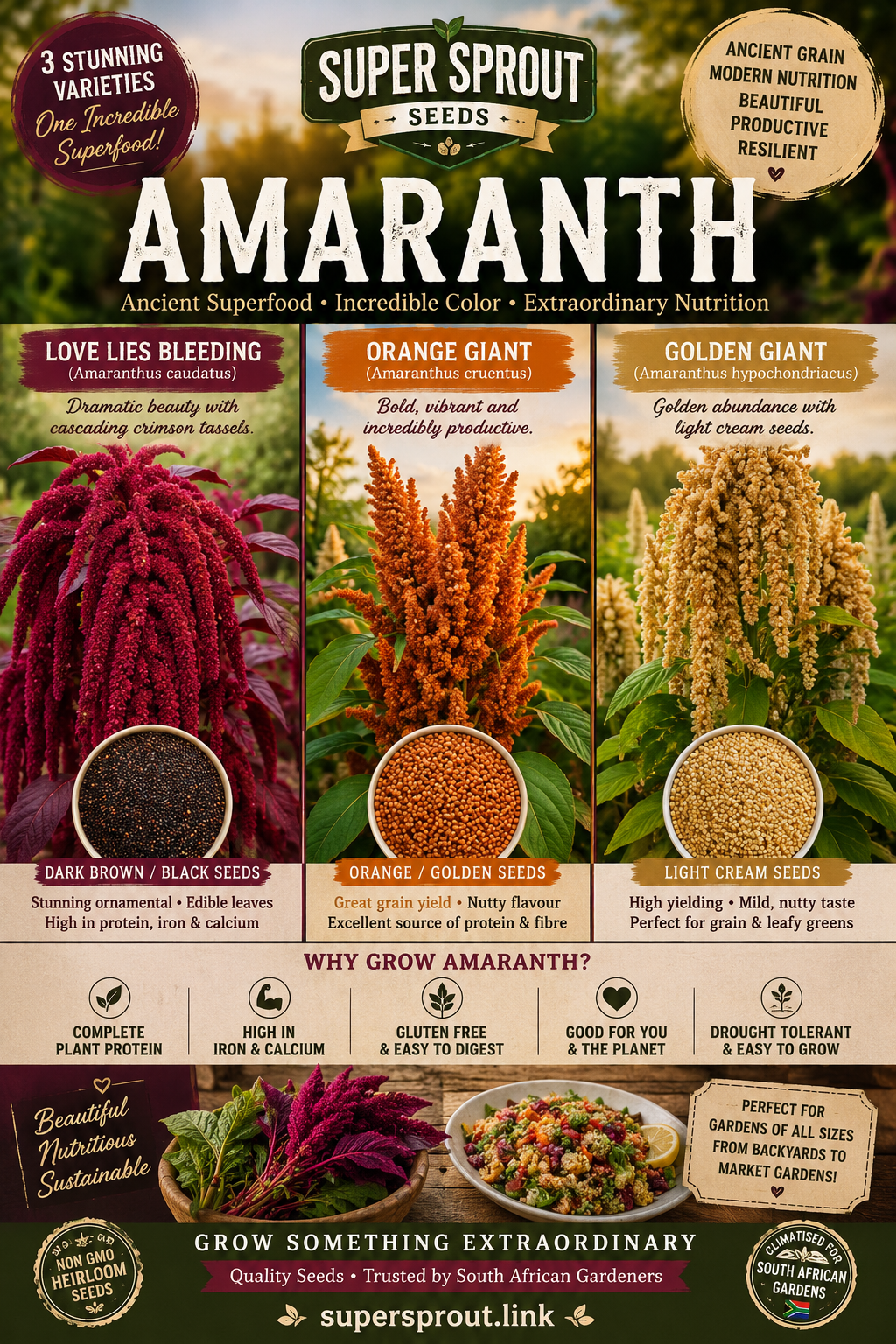
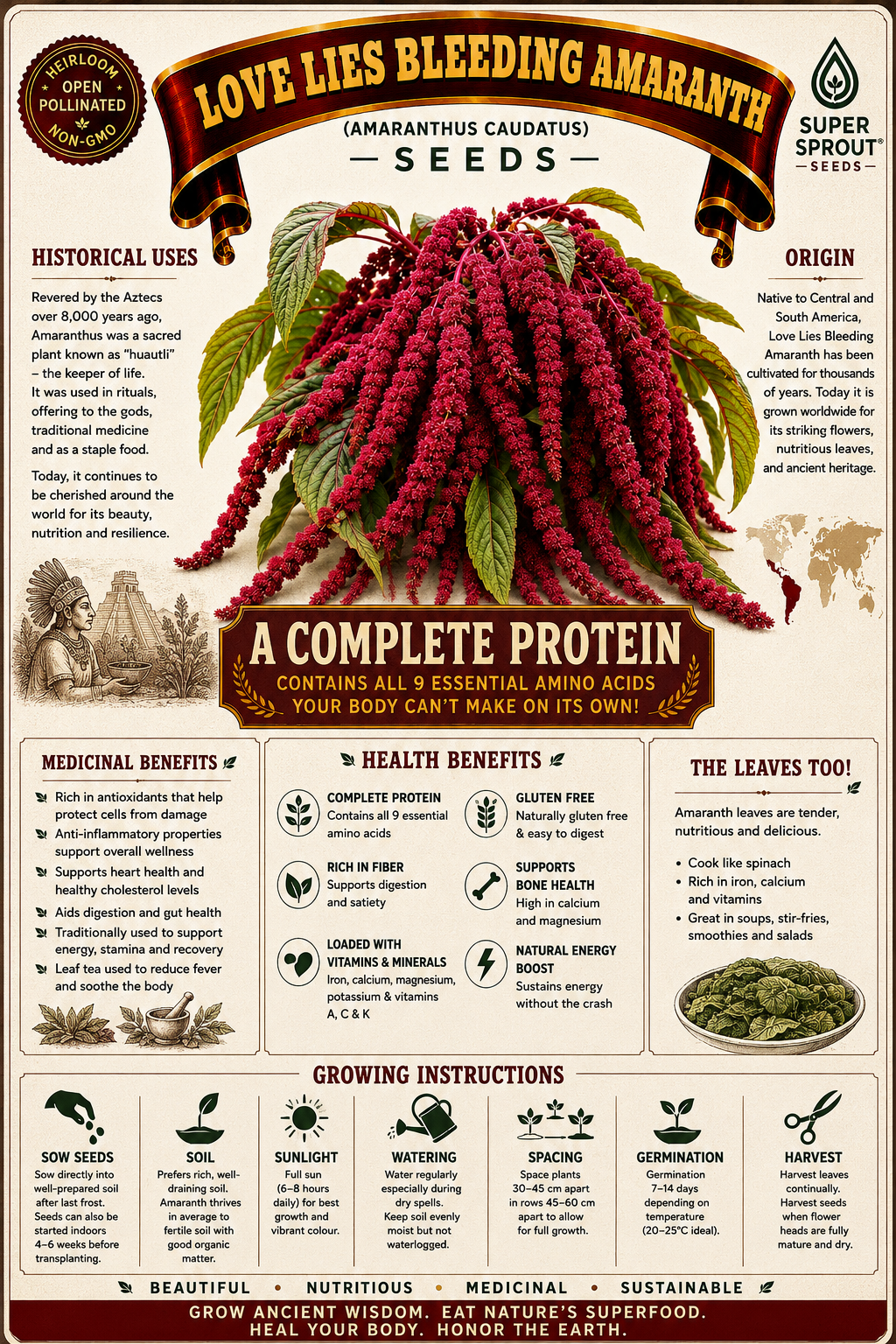
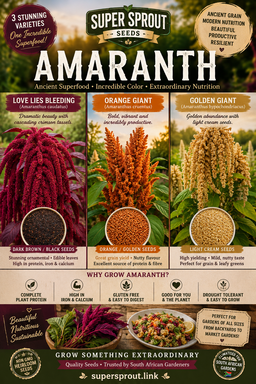
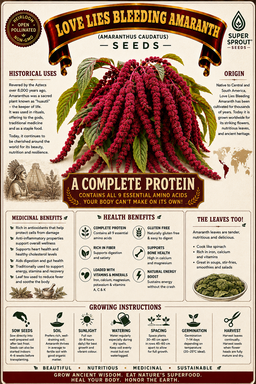
Love Lies Bleeding Amaranth (Amaranthus caudatus) is unusual because it combines striking ornamental beauty with edible, highly nutritious leaves and seeds. It has been cultivated for thousands of years and was an important crop in the Andes of South America, particularly in present-day Peru, Bolivia, and Ecuador. (While some amaranth species were staple crops of the Aztecs in Mexico, A. caudatus is most strongly associated with the Andes.)
What makes it special:
Spectacular ornamental plant: Its long, cascading crimson flower tassels can reach 30–90 cm, making it one of the most dramatic flowers in the garden.
Edible from top to bottom: Young leaves are eaten like spinach, while the tiny seeds are harvested as a nutritious grain.
Highly nutritious: The seeds are naturally gluten-free and contain more protein than most cereals. They are particularly rich in lysine, an essential amino acid that is relatively scarce in wheat and maize.
Ancient crop: Amaranth has been cultivated for several thousand years as both a food and ceremonial plant by Indigenous peoples of the Americas.
Excellent for pollinators: The flowers attract bees and other beneficial insects.
Drought tolerant: Once established, it tolerates heat and dry conditions better than many leafy vegetables.
Long flowering season: The colorful tassels remain attractive for months and also make outstanding dried flowers.
Traditional uses
Young leaves cooked as a leafy green.
Seeds popped like popcorn or cooked into porridge.
Ground into flour for breads and baked goods.
Used in traditional foods and ceremonies in parts of South America.
Potential health benefits
Research suggests amaranth may:
Provide high-quality plant protein.
Supply dietary fiber for digestive health.
Be a good source of iron, magnesium, manganese, phosphorus, and calcium.
Contain antioxidants such as phenolic compounds and betalain pigments that help protect cells from oxidative stress.
It's worth noting that while amaranth is very nutritious, claims that it cures diseases are not supported by strong clinical evidence. It should be viewed as a healthy food rather than a medicine.
Overall, Love Lies Bleeding is one of the few plants that is simultaneously:
A stunning ornamental flower,
A nutritious leafy vegetable,
A high-protein grain crop,
And an excellent cut and dried flower.
Sources: Kew Science – Plants of the World Online (for taxonomy and origin); Food and Agriculture Organization (FAO) publications on amaranth; Lost Crops of the Incas, which documents the crop's history, nutrition, and cultivation.