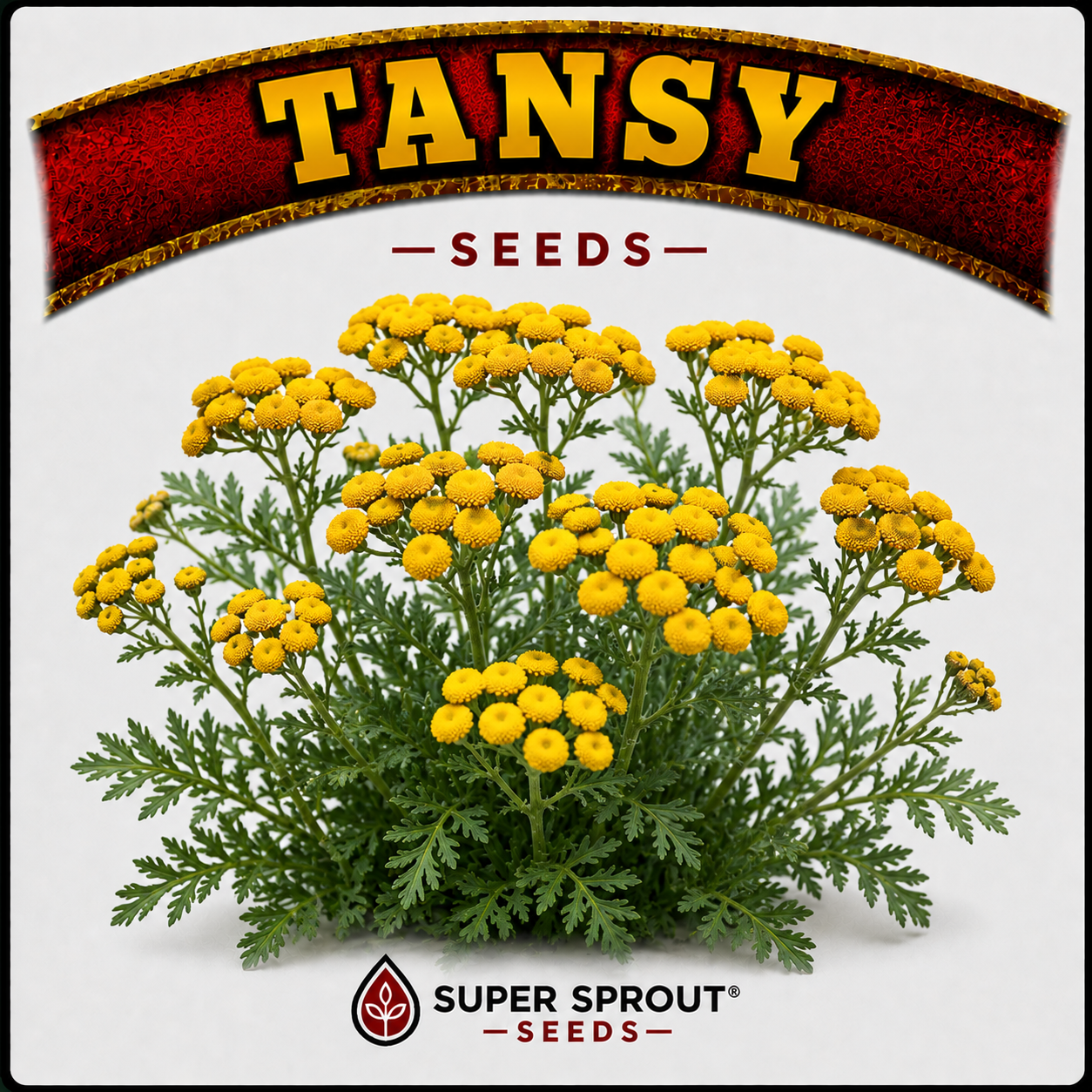
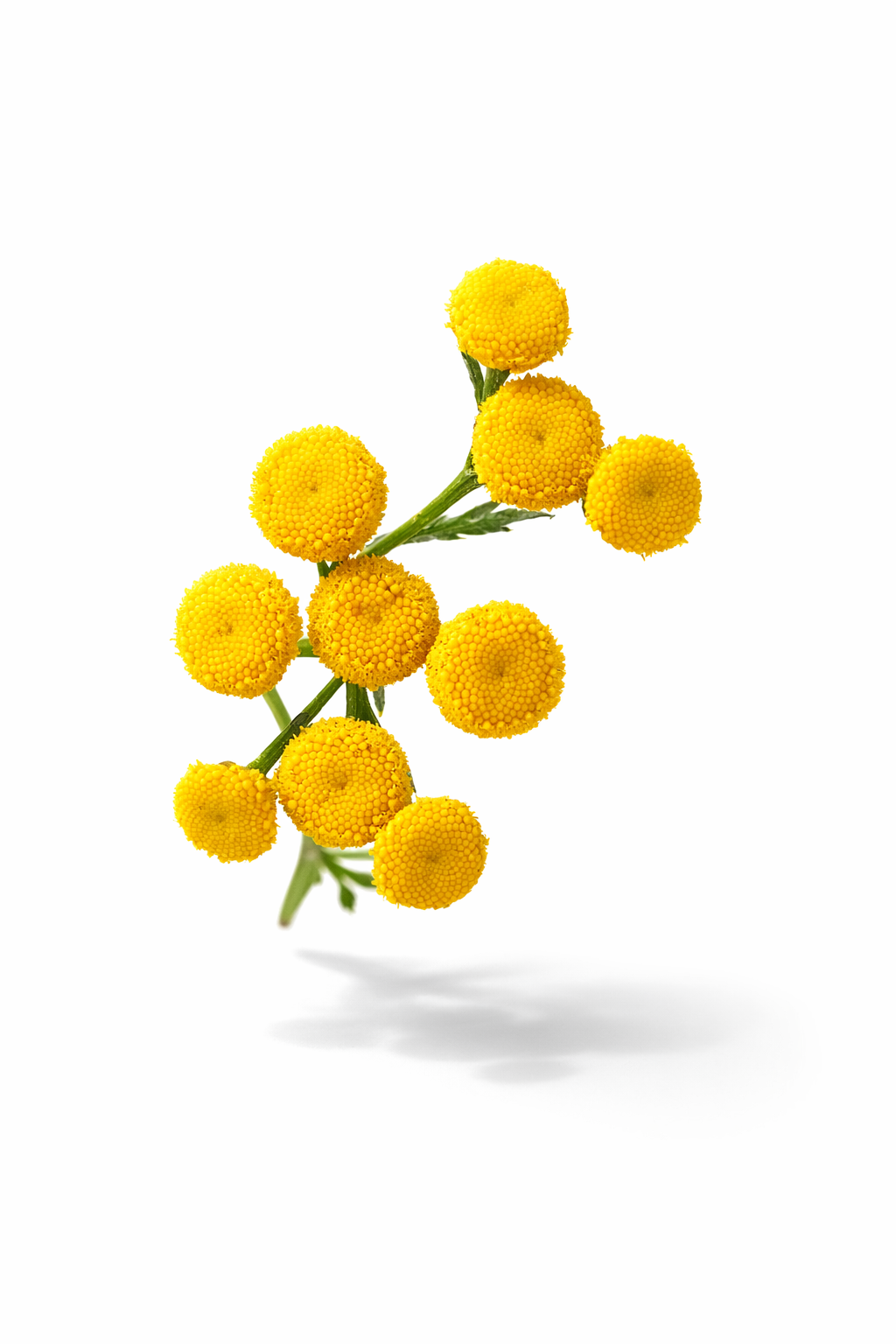
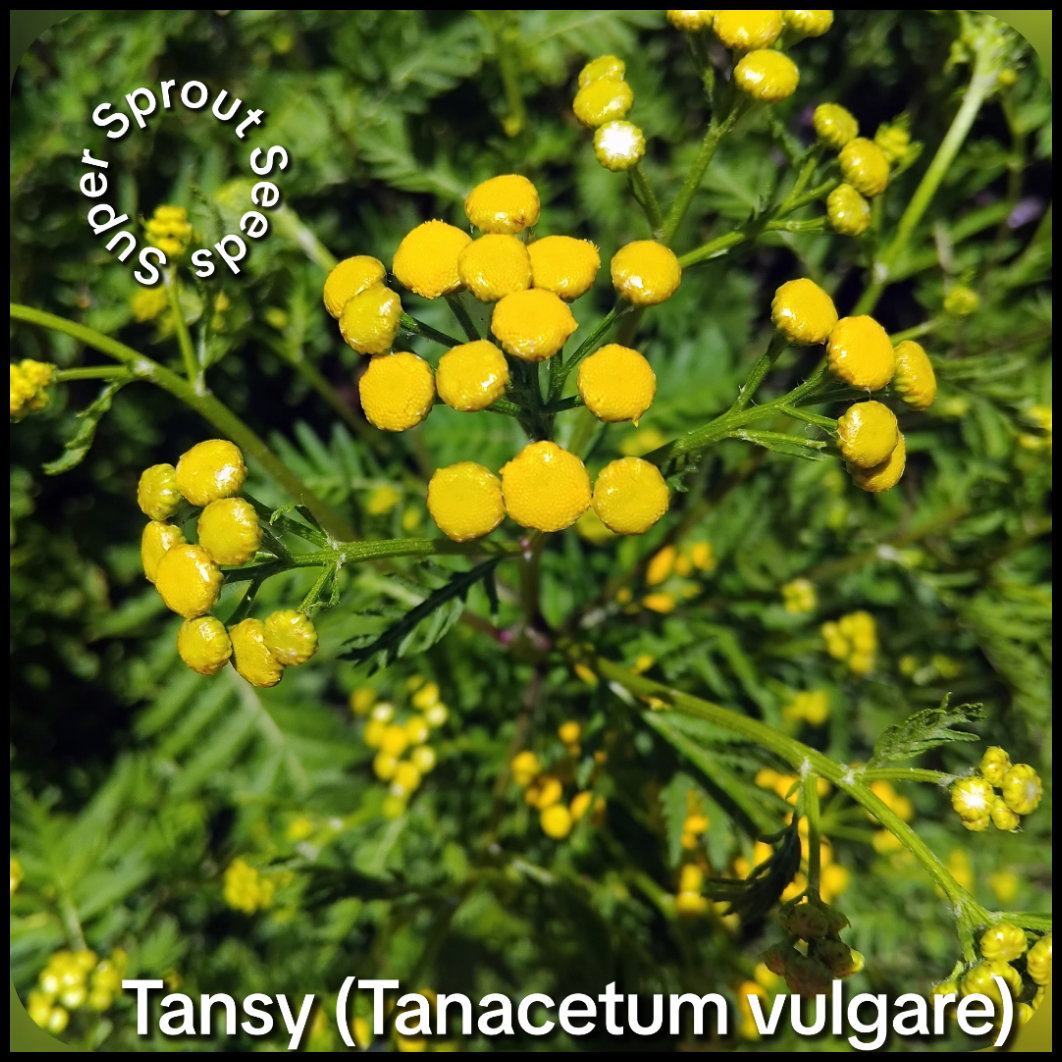
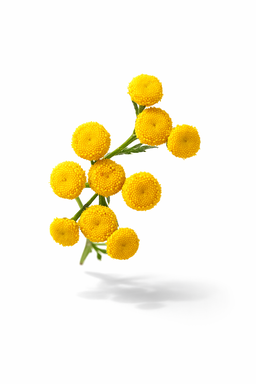
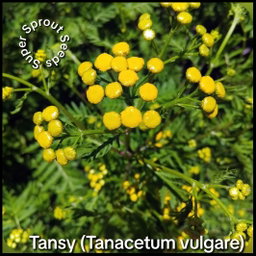
Tansy (Tanacetum vulgare) is a hardy, aromatic perennial herb known for its fern-like leaves and bright yellow, button-like flowers, used historically as an insect repellent, medicinal herb, and culinary flavoring (though cautiously due to toxicity). Native to Europe and Asia, it spreads easily, thrives in sunny spots, and contains thujone, a compound that makes it toxic in large amounts, potentially harming livestock and humans, especially pregnant women.
Key Characteristics
Appearance: Tall, upright stems (2-4 ft), deeply lobed, fern-like green leaves, and clusters of small, petal-less yellow flowers.
Scent: Strong, camphor-like aroma.
Growth: Spreads aggressively via roots and seeds, often found in disturbed areas like roadsides.
Uses
Insect Repellent: Volatile oils deter flies, fleas, and other pests; used in sachets and historically tucked into clothing.
Medicinal (Traditional): Used for digestion, headaches, worms, and skin issues, but caution is paramount due to toxicity.
Ornamental: Adds texture and color to gardens.
Cautions
Toxicity: Contains thujone; large quantities are toxic and can cause convulsions.
Livestock: Toxic to livestock, especially cattle, potentially affecting milk flavor and causing health issues like abortion.
Pregnancy: Likely unsafe due to uterine stimulant properties.
Growing Conditions
Sun: Full sun to partial shade.
Soil: Adaptable but prefers well-drained, moderately fertile soil.