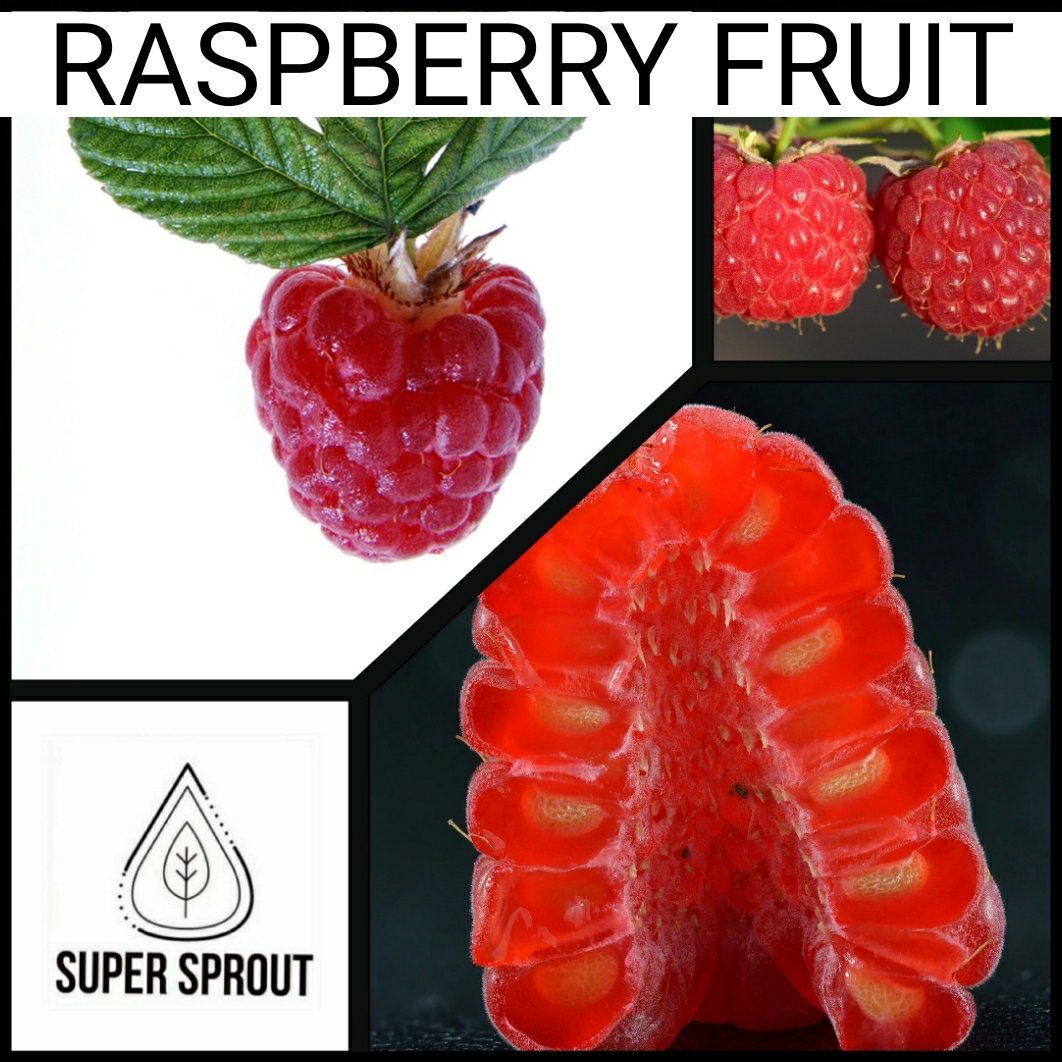
❤️ RASPBERRY SEEDS
Super Sprout Seeds
SALES DESCRIPTION
🌱 Grow Your Own Delicious, Sweet Raspberries!
Enjoy the wonderful taste of homegrown raspberries straight from your garden!
Raspberries (Rubus idaeus and related hybrids) are prized for their beautiful ruby-red berries, delicious sweet-tart flavour and delicate aroma.
These attractive perennial berry plants produce clusters of juicy fruit that are perfect for fresh eating, desserts, smoothies, jams, preserves and baking.
🍓 Why Grow Raspberries?
❤️ Delicious Homegrown Berries: Enjoy juicy, flavourful raspberries picked fresh from your garden.
🌸 Beautiful Flowering Plants: Delicate blossoms attract bees and other beneficial pollinators.
🌿 Perennial Growth: Once established, raspberry plants can produce new fruiting canes year after year.
🍰 Versatile Harvest: Perfect for fresh eating, homemade jam, desserts, yoghurt and freezing.
🌱 Grow From Seed: Experience the satisfaction of raising your own raspberry plants from the beginning.
🇿🇦 Suitable for South African Gardens: Raspberries can thrive in cooler regions and suitable microclimates with fertile soil, consistent moisture and protection from extreme heat.
Important: Seed-grown raspberries can vary in fruit size, flavour and growth characteristics. Plants may take 2–3 years to establish and produce a worthwhile harvest.
🌿 SUPER SPROUT SEEDS
PLANT TODAY. GROW SOMETHING EXTRAORDINARY.
🌐
https://supersprout.link---
🌱 RASPBERRY GROWING INSTRUCTIONS
1. Seed Preparation – Cold Stratification
❄️ IMPORTANT: Raspberry seeds generally benefit from cold stratification to help break dormancy and improve germination.
- Soak seeds in room-temperature water for approximately 24 hours.
- Mix seeds with slightly damp cocopeat, vermiculite or clean sand.
- Place the mixture inside a sealed plastic bag or container.
- Refrigerate at approximately 2–5°C for 8–12 weeks.
- Keep the medium slightly moist, never soaking wet.
- Check periodically for mould or early germination.
- Do not freeze the seeds.
Some raspberry seed lots have deeper dormancy and may require additional pretreatment or a longer germination period.
2. Sowing
- After cold stratification, sow seeds into seed trays or small pots.
- Use a fine, well-draining seed-starting mixture.
- Sow approximately 2–3 mm deep.
- Cover lightly with fine growing medium.
- Mist gently with water.
- Keep the growing medium consistently moist.
3. Germination
🌡️ Ideal temperature: Approximately 18–24°C.
🌱 Germination time: Commonly several weeks to several months after stratification.
- Place trays in bright, indirect light.
- Avoid direct, scorching sunlight.
- Maintain consistent moisture.
- Be patient, as raspberry germination can be slow and irregular.
4. Transplanting
- Transplant seedlings when they have developed several true leaves and strong roots.
- Use individual pots with fertile, well-drained soil.
- Gradually introduce plants to outdoor conditions.
- Protect young seedlings from frost, strong winds and extreme heat.
5. Sunlight & Position
☀️ Raspberries prefer full sun in cooler climates.
- Provide approximately 6–8 hours of sunlight where temperatures are moderate.
- In hotter South African regions, morning sun and afternoon shade can be beneficial.
- Choose a sheltered position with good air circulation.
- Provide trellises or support wires as the canes develop.
6. Soil Requirements
- Raspberries prefer fertile, well-drained soil rich in organic matter.
- Preferred soil pH: Approximately 5.5–6.5.
- Incorporate well-rotted compost before planting.
- Avoid heavy, waterlogged soil.
- Mulch around plants to retain moisture and keep roots cool.
7. Watering
💧 Keep soil consistently moist, especially during flowering and fruit development.
- Water deeply when needed.
- Avoid allowing the root zone to dry out completely.
- Water at soil level to reduce fungal diseases.
- Avoid permanently saturated soil.
8. Feeding
- Apply compost or a balanced fertiliser during active growth.
- Avoid excessive nitrogen, which can encourage leafy growth at the expense of fruit.
- Maintain a layer of organic mulch around established plants.
9. Pruning & Maintenance
✂️ Raspberry pruning depends on whether the plant produces fruit on first-year or second-year canes.
- Remove dead, damaged and diseased canes.
- Thin overcrowded growth to improve airflow.
- Support tall canes with a trellis.
- For summer-fruiting types, remove canes that have finished fruiting.
- For autumn-fruiting types, pruning depends on the desired cropping system.
10. Flowering & Harvesting
🍓 Seed-grown raspberry plants may begin fruiting in their second or third growing season, depending on variety and conditions.
- Harvest when berries are fully coloured and detach easily.
- Pick gently to avoid crushing delicate fruit.
- Harvest regularly during the fruiting season.
- Fruit production depends on climate, chilling requirements and plant maturity.
🇿🇦 South African Growing Tips
In the Western Cape, late winter to early spring is a useful time to sow raspberry seeds that have completed cold stratification.
Raspberries generally perform best in areas with cooler winters and mild summers.
In warmer regions:
- Provide afternoon shade during hot weather.
- Keep roots cool with organic mulch.
- Maintain consistent soil moisture.
- Grow in large containers if garden soil is unsuitable.
- Choose a position protected from hot, drying winds.
Important: Raspberry varieties differ in their winter chilling requirements. Not all raspberry plants will fruit reliably in warm, low-chill areas.
🌿 SUPER SPROUT SEEDS
PLANT TODAY. GROW SOMETHING EXTRAORDINARY.
🌐
https://supersprout.link