Core Peptides Logo
cart0
search
Home / Acetyl Hexapeptide-3 (Argireline) (200mg)Core Peptides Logo
cart0
search
Home / AOD 9604 (5mg)
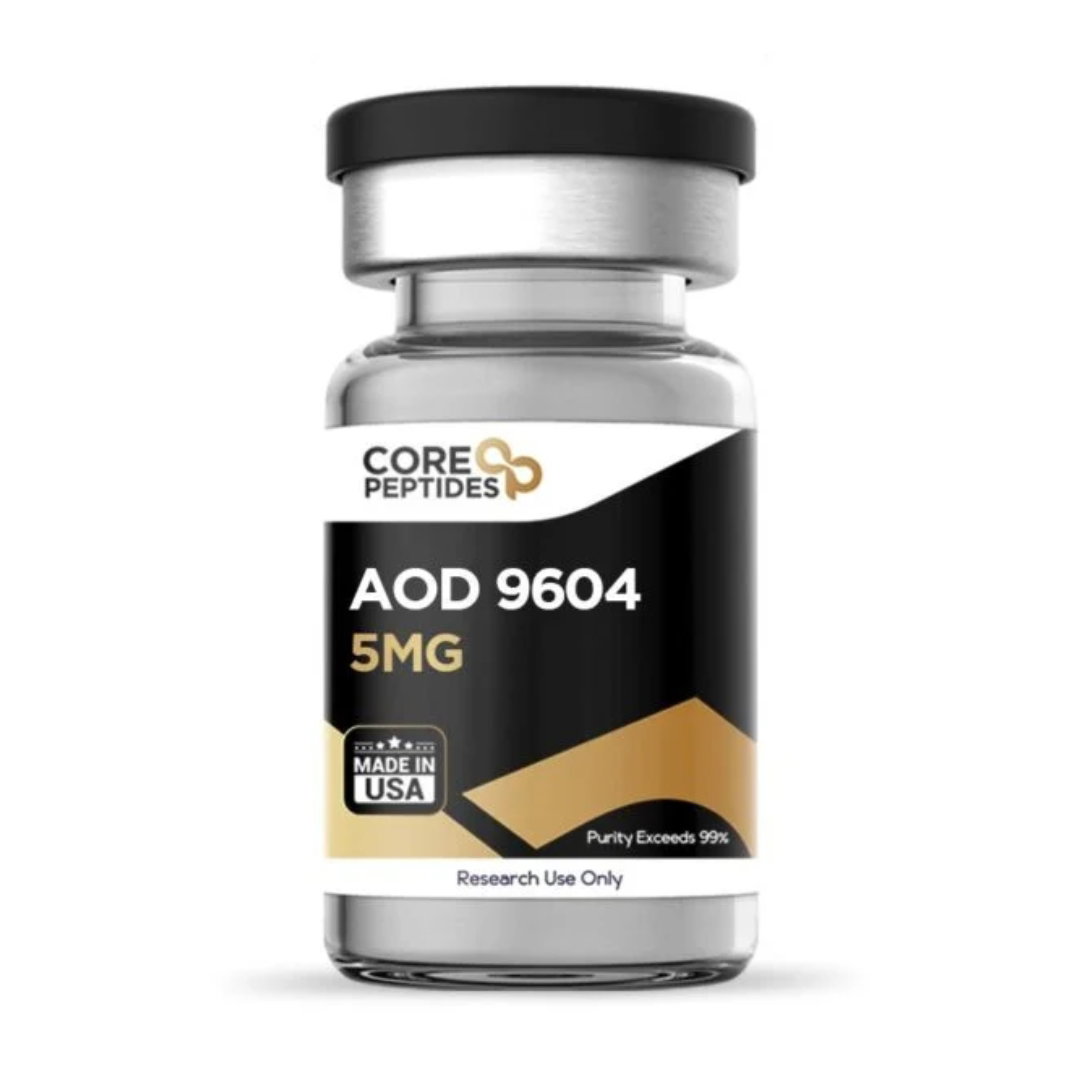
AOD 9604 (5mg)
AOD 9604 (5mg)
$41.00
Size: 5mg
Contents: AOD 9604 (5mg)
Form: Lyophilized powder
Purity: >99%
SKU: P-AOD9604-5
FREE Shipping on $200+ orders
Quantity 5 - 8 9 +
Discount 5% 10%
Price $38.95 $36.90
AOD 9604 (5mg) quantity-
1
+ Add to cart
Description
Certificate of Analysis
HPLC
Mass Spectrometry
AOD 9604 Peptide
AOD 9604 peptide is a synthetic analog of growth hormone designed with the intention of mitigating obesity and aiding weight loss. The peptide is a modified fragment of the growth hormone where the last 16 amino acids (176-191) have been reproduced as a specific peptide, called GH Fragment 176-191 or simply AOD 9604. It also has a tyrosine residue to replace the first amino acid at the N-terminus, which researchers consider to help increase the stability of the peptide.(1)
More specifically, AOD 9604 is considered the lipolytic fragment of GH as different parts of the GH molecule appease to have different potentials. For instance, studies suggest that out of its 191 amino acid structure “the N-terminal region exhibits an insulin-potentiating action, while amino acids 108 - 129 of hGH were found to evoke high mitogenic responses.”(2)
Overview
AOD 9604 peptide was developed in the 1990s in an effort to develop proteins which might exhibit anti-obesity properties similar to Growth Hormone (hGH). Rigorous scientific studies and experiments have since been conducted to determine the potential action of AOD 9604 in lipolysis.(1) Lipolysis is a term to describe the process through which stored fats or triglycerides in fat cells are broken down into glycerol and free fatty acids, which may be used as an energy source by other cells. Enzymes such as lipase appear to play a critical role in this process, helping in the breakdown of these fats. It's possible that AOD9604 may influence the fat cells and lipolytic receptors, particularly given its observed association with changes in weight and fat in murine models. Research study findings indicate that the fragment seems to have the capacity to amplify lipolytic sensitivity following its introduction. Furthermore, the study hypothesizes a potential interaction of AOD9604 with the beta-adrenergic pathway, especially concerning the beta(3)-adrenergic receptors (beta(3)-AR), which are considered to be key lipolytic receptors found in fat cells. While it is not entirely clear, the expression level of beta(3)-AR RNA, the primary lipolytic receptor in fat cells, was observed to increase in the presence of AOD 9604. This could possibly suggest that the peptide might be playing a role in enhancing the sensitivity of these lipolytic receptors, potentially making them more responsive to lipolytic stimuli. However, it is essential to note that while the peptide appears to elevate the expression of beta(3)-AR, it may not act directly through the beta(3)-AR to induce its potential lipolytic action.
Scientists and researchers have suggested that the modified portion of the hGH in the AOD 9604 peptide may be responsible for significantly inducing the fat burning process, possibly without stimulating the production of Insulin-like Growth Factor IGF 1, as opposed to the natural growth hormone.
Chemical Makeup
Molecular Formula: C78H123N23O23S2
Molecular Weight: 1815.12 g/mol
Other Known Titles: Tyr-hGH Fragment 177-191
Research and Clinical Studies
AOD 9604 Peptide and Lipolytic Activity
Early studies were carried out on obese mice where the AOD 9604 peptide was periodically introduced for 14 days. Following the experiment, the results reported a reduction in weight and excess fat. These results appeared directly correlated with the increased levels of major lipolytic receptors, beta(3)-AR, found in the fat cells. AOD 9604 peptide appeared to exhibit action similar to hGH wherein both may be capable of increasing repressed levels of lipolytic receptors in obese mice as compared to the lean mice. To confirm whether the lipolytic action of AOD 9604 might merely be associated with the increased lipolytic receptor levels, additional studies were carried out where AOD 9604 was given to mice with knocked out lipolytic receptors. Further analysis suggested that the AOD 9604 peptide enacted the lipolytic action via increased energy expenditure and fat oxidation.(1) Both these findings on chronic and acute action of AOD 9604 suggested that while enhanced beta(3)-AR expression may have played a role in the chronic action of the compound, beta(3)-AR might not be the sole arbiter in this reaction. Oxidation and enhanced energy expenditure appeared to be vital in the proposed action of the peptide.
In 2000, a research study was carried out in obese Zucker rats where the AOD 9604 peptide was given daily for 19 consecutive days. Following the study, it was reported that weight appeared to be reduced in all rats by over 50%, in comparison to the rats given a placebo. Further analysis suggested that the adipose tissues of the AOD 9604 peptide animals had increased lipolytic activity and no marked insulin sensitivity interruption in the animals.(3)
AOD 9604 Peptide and Obesity
In 2004, clinical trials observed the actions of the peptide in 300 obese subjects who were given the peptide for 12 weeks. The rate of weight loss remained consistent throughout the study period. The trial results noted minor improvement exhibited in the subjects’ cholesterol profiles and glucose tolerance levels.(4)
AOD 9604 Peptide and Cell Regeneration
Additional research was conducted to study the regenerative potential of the peptide. In 2015, 32 white rabbits were divided into four groups of eight, and each group was given a placebo, AOD 9604, hyaluronic acid, or a combination of AOD 9604 and hyaluronic acid for 4 to 7 weeks. After the study, these rabbits were assessed morphologically and histopathologically to determine the degree of cartilage degeneration. It was concluded that rabbits given the combination of AOD 9604 with hyaluronic acid apparently exhibited the least degeneration. Thus, it was suggested by the researchers that AOD 9604 might exhibit potential to enhance cartilage regeneration and cartilage repair in some capacity.(5)
This may be due to the potential role of AOD 9604 in cellular differentiation processes and, potentially, in the synthesis of proteins important for tissue repair. According to an in vitro study, AOD 9604 may possibly enhance the differentiation of adipose mesenchymal stem cells into bone(5). These stem cells, which are typically found within fat tissue, may have the potential to evolve into various cell types. It has been hypothesized that under the influence of AOD 9604, these stem cells may show a predisposition to differentiate into bone cells. Moreover, when the research was conducted on isolated bovine chondrocytes, it appeared that there might be an increased production of proteoglycan and collagen. Chondrocytes are cells believed to be found within cartilage tissue, and they possibly play a role in producing and maintaining the extracellular matrix, which consists of components like collagen and proteoglycans. It is posited that the presence of AOD 9604 could stimulate these chondrocytes to produce more of these vital components. The study also hints at the idea that AOD 9604 might promote the differentiation of myoblasts into C2C12 cells. Myoblasts are thought to be precursor muscle cells, and C2C12 cells are a type of murine model muscle cell line. From what the study suggests, AOD 9604 may assist in the transition of these precursor cells into a more mature form. The research seems to underline the potential role AOD 9604 might have in processes connected to the repair of bone, cartilage, and muscle tissues.
AOD 9604 and Research in Cancer Cells
The peptide may be able to bind (target) tumor-related proteins to enhance tumor drug accumulation and local cytotoxicity.(6) The hGH fragment AOD 9604 may potentially play a pivotal role in cancer cell research, as it has been observed to enhance the anticancer efficacy of doxorubicin, a commonly recognized chemotherapeutic agent. One study utilized chitosan nanoparticles, a biocompatible and biodegradable polymer, as a carrier for doxorubicin and AOD 9604.(6) The research team hypothesized that AOD 9604 possibly enhanced the doxorubicin binding to multiple breast cancer cell protein targets, thereby exhibiting greater anti-proliferative activity against the MCF-7 breast cancer cell line compared to chitosan loaded with doxorubicin alone. This suggests that AOD 9604 may potentially augment the anti-cancer potency of doxorubicin while possibly minimizing unintended actions associated with non-target tissue exposure. In conclusion, multiple clinical studies have suggested that the peptide may significantly induce lipolysis and possibly prevent lipogenesis by mimicking natural hGH.
AOD 9604 is available for research and laboratory purposes only. Please review and adhere to our Terms and Conditions before ordering.
References:
Mark Heffernan, Roger J. Summers, Anne Thorburn, Esra Ogru, Robert Gianello, Woei-Jia Jiang, Frank M. Ng, The Effects of Human GH and Its Lipolytic Fragment (AOD 9604) on Lipid Metabolism Following Chronic Treatment in Obese Mice and β 3-AR Knock-Out Mice, Endocrinology, Volume 142, Issue 12, 1 December 2001, Pages 5182–5189.
https://pubmed.ncbi.nlm.nih.gov/11713213/Moré, M. I., & Kenley, D. (2014). Safety and metabolism of AOD9604, a novel nutraceutical ingredient for improved metabolic health. Journal of Endocrinology and Metabolism, 4(3), 64-77.
Frank M. Ng, J Sun et.al, Metabolic Studies of a Synthetic Lipolytic Domain (AOD 9604) of Human Growth Hormone, Hormone Research, February 2000.
News, Medical and Life Sciences, Obesity drug codenamed AOD 9604 highly successful in trials, 16 December 2004.
Dong Rak Kwon and GI Young Park, Effect of Intra-articular Injection of AOD9604 with or without Hyaluronic Acid in Rabbit Osteoarthritis Model, Annals of Clinical and Laboratory Science, Volume 45, July-August 2015.
Habibullah, M. M., Mohan, S., Syed, N. K., Makeen, H. A., Jamal, Q. M. S., Alothaid, H., Bantun, F., Alhazmi, A., Hakamy, A., Kaabi, Y. A., Samlan, G., Lohani, M., Thangavel, N., & Al-Kasim, M. A. (2022). Human Growth Hormone Fragment 176-191 Peptide Enhances the Toxicity of Doxorubicin-Loaded Chitosan Nanoparticles Against MCF-7 Breast Cancer Cells. Drug design, development and therapy, 16, 1963–1974.
https://doi.org/10.2147/DDDT.S367586Dr. Marinov
Dr. Marinov (MD, Ph.D.) is a researcher and chief assistant professor in Preventative Medicine & Public Health. Prior to his professorship, Dr. Marinov practiced preventative, evidence-based medicine with an emphasis on Nutrition and Dietetics. He is widely published in international peer-reviewed scientific journals and specializes in peptide therapy research.
Acetyl Hexapeptide-3 (Argireline) (topical) (200mg) IMG
Acetyl Hexapeptide-3 (Argireline) (200mg)
$226.00
Size: 200mg
Contents: Acetyl Hexapeptide-3 (Argireline)
Form: Lyophilized powder
Purity: >99%
SKU: P-ACETYL-HEXAPEPTIDE-3
FREE Shipping on $200+ orders
Quantity 5 - 8 9 +
Discount 5% 10%
Price $214.70 $203.40
Acetyl Hexapeptide-3 (Argireline) (200mg) quantity-
1
+ Add to cart
Description
Acetyl Hexapeptide-3
Acetyl Hexapeptide-3 is a synthetic peptide commonly researched for its potential action in reducing wrinkle formation in skin tissues. Researchers developed Acetyl Hexapeptide-3 as a competitive SNAP25 (synaptosome-associated protein 25 kDa) inhibitor. SNAP-25 is a component of the SNARE (soluble N-ethylmaleimide sensitive factor attachment protein receptor) complex, which is posited to be a central regulator of synaptic vesicle Ca(2+)-dependent exocytosis - a key process in the release of signaling molecules and cellular communication. This inhibition is thought to occur due to the apparent similarity between the amino acid sequence pattern from the N-terminal end of SNAP-25 and Acetyl Hexapeptide-3. This is hypothesized to prevent the formation of the SNARE complex and inhibit the exocytosis of messengers. By apparently inhibiting exocytosis, Acetyl Hexapeptide-3 may potentially block the release of acetylcholine, a neurotransmitter involved in muscle contractions that mediates the communication between nerve and muscle cells.
Conducting research with Acetyl Hexapeptide-3 is considered a milder and less invasive alternative to bacterial toxins because the peptide may have the potential to act directly through the skin tissues and reach any superficially underlying muscle cells.(2) The peptide may also have research applications in other areas related to skin tissue and muscle tissue studies, such as collagen synthesis, muscle spasms, and scarring. Furthermore, palmitoylated peptide versions have been posited to block the function of pain-mediating neurons.
Chemical Makeup
Molecular formula: C34H60N14O12S
Molecular weight: 888.99 g/mol
Other known titles: Acetyl Hexapeptide-8, Argireline
Research and Clinical Studies
Acetyl Hexapeptide-3 and Wrinkles
Acetyl Hexapeptide-3 was apparently designed to mimic the action of BoNTs while passing through the skin layers. One study suggested that an emulsion containing Hexapeptide led to an apparent reduction in wrinkle depth by up to 30% after 30 days in 10 test subjects.(2)
An additional study investigated the impact of Acetyl Hexapeptide-3 on the skin properties of 24 test subjects and reported similar results.(3) Subjects were randomly assigned to a peptide or placebo group for 60 days. Skin microtopography and transepidermal water loss (TEWL) were estimated at different times throughout the experiment. The authors suggested that Acetyl Hexapeptide-3 had possible anti-wrinkle activity and might decrease TEWL, indicating increased water retention and hydration of the skin tissues. The potential of the peptide does not appear to depend on the type of skin model.
Further data has also posed similar findings. For example, another clinical study that involved 52 test subjects was conducted over 29 days to evaluate the potential impact of Acetyl Hexapeptide-3 in wrinkle improvement.(4) After the study, the scientists observed apparently improved skin wrinkle morphology and skin hydration in all groups.
In another clinical study, the scientists report that compared to the placebo, "the total anti-wrinkle efficiency …] was 48.9%, the depth of the wrinkles was notably reduced" in the Acetyl Hexapeptide-3 group.(5)
Experiments with murine models suggest that Acetyl Hexapeptide-3 may help improve wrinkles and fine lines by interacting with collagen synthesis, although this mechanism is poorly studied. For example, one study in aged murine models which were given the peptide for six weeks exhibited an apparent improvement in the histological structure of the skin tissue, with an increase in type I collagen fibers and a decrease in type III collagen fibers.(6) The study concluded that Acetyl Hexapeptide-3 might rejuvenate aging skin tissues through a potential impact on its histological structure.
Acetyl Hexapeptide-3 and Muscle Spasms
Acetyl Hexapeptide-3 has been studied in the context of involuntary muscle spasms, such as blepharospasms, characterized by involuntary contractions of the eyelid muscles. One study investigated the potential of Acetyl Hexapeptide-3 for blepharospasm in a clinical setting.(7) The study involved 24 test subjects with blepharospasm in a double-blind, placebo-controlled, randomized design. The primary outcome measured was the time until the spasm before the experiment returned, and the spasm grade was assessed via the Jankovic Blepharospasm Rating Scale (JBRS). There was a trend for a longer period until the return of the spasm in the active group compared to the placebo group, with an average of 3.7 months versus 3.0 months. Additionally, the active group tended to have better JBRS scores- or a lower grade of blepharospasm- than those in the placebo group. Interestingly, the researchers also report that "One-third (4/12) of the [subjects] in the active group had a considerable extension of symptom control after [neurotoxins] (range: 3.3-7.1 months)."
Acetyl Hexapeptide-3 and Scarring
According to one retrospective study, Acetyl Hexapeptide-3 may support the mitigation of scar tissues, such as the one that may develop following the damage of skin cells.(8) Scientists measured skin tissue quality parameters, took photographs, and performed a clinical assessment before and after the study.(8) This apparent effect on scarring tissues may be due to the aforementioned potential of Acetyl Hexapeptide-3 to minimize the production of collagen type 3 fibers. Collagen type 3 fibers are typical for scar tissues and are identified as having low elasticity and a structure that differentiates from surrounding tissues. Moreover, this was observed as a potential factor that increased the elasticity of regenerating tissues. More specifically, the authors reported that scar tissue elasticity increased "from 33.5% to 40.5%” in certain areas of the skin tissues.
Acetyl Hexapeptide-3 and Pain Perception
Acetyl Hexapeptide-3 has undergone various in vitro examinations to determine its possible effects on cell and molecular activities linked to neurotransmission and pain sensation. For instance, the palmitoylated version of Acetyl Hexapeptide-3, called DD04107, has been studied for its potential analgesic activity in chronic inflammatory and neuropathic pain models.(9) It was suggested to be potentially impactful in blocking the inflammatory recruitment of ion channels and the release of calcitonin gene-related peptides, resulting in anti-hyperalgesia and anti-allodynia. Further, the study purported that the palmitoylated form of Acetyl Hexapeptide-3 might hinder the release of neuromodulators, which are considered crucial to pain-related signaling. This may potentially be achieved by disrupting SNAP-25 activity and blocking the Ca(2+)-dependent release of these neuromodulators. Consequently, this modified form of Acetyl Hexapeptide-3 might prevent the activation of TRPV1 channels, which are involved in inflammatory processes, further showcasing its potential to alleviate hyperalgesia and allodynia. TRPV1 channels, primarily located on sensory nerve fibers responsible for pain perception, are considered to be triggered by various elements such as heat, inflammatory substances, and chemical irritants. Activation of these channels is considered a key step in pain signal generation and transmission.
In another experiment, carrageenan-induced inflammation models were used to simulate acute inflammatory pain, and the palmitoylated Acetyl Hexapeptide-3 has been proposed to exhibit anti-inflammatory effects, through decreased paw swelling (an inflammation indicator) and reduced mechanical sensitivity.(10) Additionally, this peptide's actions have been assessed in chronic inflammatory pain models, like Complete Freund's Adjuvant (CFA)-induced inflammation. CFA-induced inflammation is an experimental method in scientific research to simulate chronic inflammatory conditions in laboratory models, typically murine models. CFA, a complex mixture, contains inactivated and dried mycobacteria, usually Mycobacterium tuberculosis, emulsified in mineral oil. This mixture prompts a robust and persistent inflammatory response. In such models, it has been observed to apparently reduce both thermal hyperalgesia and mechanical allodynia, suggesting its potential in influencing chronic inflammatory pain. The palmitoylated version of Acetyl Hexapeptide-3 is also considered for its potential to alleviate pain linked to peripheral neuropathy caused by various factors. It was reported by the researchers to potentially have a concentration-responsive capability to lessen mechanical hyperalgesia in animal models of such neuropathies.
Acetyl Hexapeptide-3 peptide is available for research and laboratory purposes only. Please review and adhere to our Terms and Conditions before ordering.
References:
Grosicki, M., Latacz, G., Szopa, A., Cukier, A., & Kieć-Kononowicz, K. (2014). The study of cellular cytotoxicity of argireline - an anti-aging peptide. Acta biochimica Polonica, 61(1), 29–32.
Blanes-Mira, C., Clemente, J., Jodas, G., Gil, A., Fernández-Ballester, G., Ponsati, B., Gutierrez, L., Pérez-Payá, E., & Ferrer-Montiel, A. (2002). A synthetic hexapeptide (Argireline) with antiwrinkle activity. International journal of cosmetic science, 24(5), 303–310.
https://doi.org/10.1046/j.1467-2494.2002.00153.xRaikou, V., Varvaresou, A., Panderi, I., & Papageorgiou, E. (2017). The efficacy study of the combination of tripeptide-10-citrulline and acetyl hexapeptide-3. A prospective, randomized controlled study. Journal of cosmetic dermatology, 16(2), 271–278.
https://doi.org/10.1111/jocd.12314An, J. H., Lee, H. J., Yoon, M. S., & Kim, D. H. (2019). Anti-Wrinkle Efficacy of Cross-Linked Hyaluronic Acid-Based Microneedle Patch with Acetyl Hexapeptide-8 and Epidermal Growth Factor on Korean Skin. Annals of dermatology, 31(3), 263–271.
https://doi.org/10.5021/ad.2019.31.3.263Wang, Y., Wang, M., Xiao, X. S., Pan, P., Li, P., & Huo, J. (2013). The anti wrinkle efficacy of synthetic hexapeptide (Argireline) in Chinese Subjects. Journal of cosmetic and laser therapy : official publication of the European Society for Laser Dermatology, Advance online publication.
Wang, Y., Wang, M., Xiao, X. S., Huo, J., & Zhang, W. D. (2013). The anti-wrinkle efficacy of Argireline. Journal of cosmetic and laser therapy : official publication of the European Society for Laser Dermatology, 15(4), 237–241.
https://doi.org/10.3109/14764172.2013.769273Lungu, C., Considine, E., Zahir, S., Ponsati, B., Arrastia, S., & Hallett, M. (2013). Pilot study of acetyl hexapeptide-8 in the treatment for blepharospasm in patients receiving botulinum toxin therapy. European journal of neurology, 20(3), 515–518.
https://doi.org/10.1111/ene.12009Palmieri, B., Noviello, A., Corazzari, V., Garelli, A., & Vadala, M. (2020). Skin scars and wrinkles temporary camouflage in dermatology and oncoesthetics: focus on acetyl hexapeptide-8. La Clinica terapeutica, 171(6), e539–e548.
https://doi.org/10.7417/CT.2020.2270Ponsati, B., Carreño, C., Curto-Reyes, V., Valenzuela, B., Duart, M. J., Van den Nest, W., Cauli, O., Beltran, B., Fernandez, J., Borsini, F., Caprioli, A., Di Serio, S., Veretchy, M., Baamonde, A., Menendez, L., Barros, F., de la Pena, P., Borges, R., Felipo, V., Planells-Cases, R., … Ferrer-Montiel, A. (2012). An inhibitor of neuronal exocytosis (DD04107) displays long-lasting in vivo activity against chronic inflammatory and neuropathic pain. The Journal of pharmacology and experimental therapeutics, 341(3), 634–645.
https://doi.org/10.1124/jpet.111.190678Butrón, D., Zamora-Carreras, H., Devesa, I., Treviño, M. A., Abian, O., Velázquez-Campoy, A., Bonache, M. Á., Lagartera, L., Martín-Martínez, M., González-Rodríguez, S., Baamonde, A., Fernández-Carvajal, A., Ferrer-Montiel, A., Jiménez, M. Á., & González-Muñiz, R. (2021). DD04107-Derived neuronal exocytosis inhibitor peptides: Evidences for synaptotagmin-1 as a putative target. Bioorganic chemistry, 115, 105231.
https://doi.org/10.1016/j.bioorg.2021.105231